Behavior Charts in Disguise—and Why They Need to Go
Transcript [pdf]
SHOW NOTES
In this episode, Julie and Kristie share four simple questions to help you recognize when a behavior system may still be built around compliance, comparison, or shame — and what to think about instead.
Key Takeaways
-
- Behavior charts aren’t always obvious. Digital systems, tokens, points, and public rewards can function in similar ways.
- A behavior system deserves another look when it is public, one-size-fits-all, highly symbolic, or based on comparison.
- Behavior charts may track behavior, but they don’t necessarily teach students what to do when their nervous system is overwhelmed.
- Moving away from behavior charts doesn’t mean removing expectations, boundaries, or consequences.
- The goal is to help students build regulation, connection, and belonging, not simply compliance.
Answering a Common Question
How do you know if you’re using a behavior chart in disguise?
Start with four questions:
-
- Is it public?
- Is it one-size-fits-all?
- Is it highly symbolic?
- Does it rely on shame, comparison, or competition?
If you’re answering yes, it may be time to look more closely at what the system is actually teaching students.
Episode Download / Handout
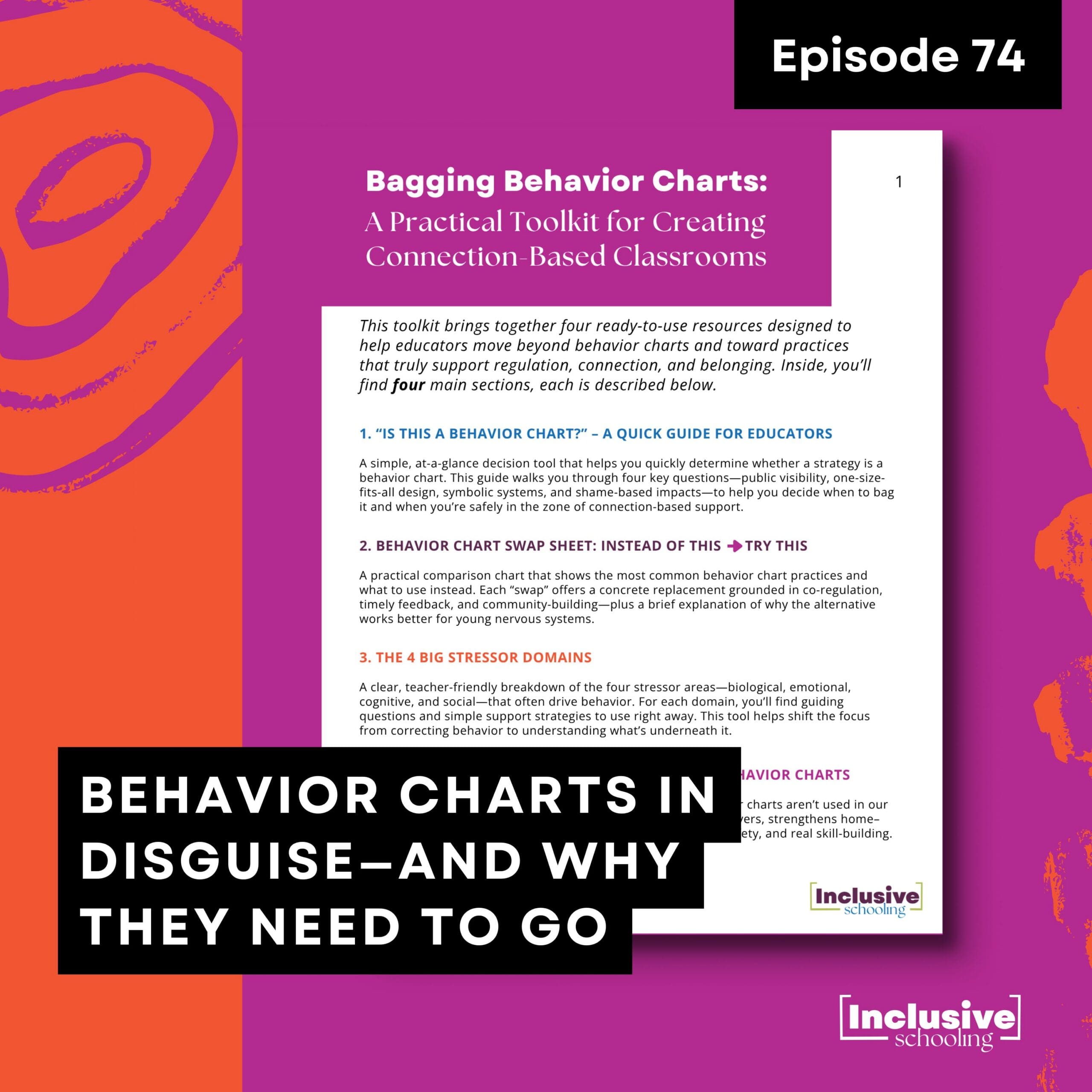
Bagging Behavior Charts: A Practical Toolkit for Creating Connection-Based Classrooms
This 7-page toolkit helps you identify behavior charts in disguise and gives you practical alternatives for supporting behavior without relying on public tracking, rewards, or shame.
You’ll get:
-
- A quick “Is This a Behavior Chart?” decision guide
- A Behavior Chart Swap Sheet with better alternatives
- A guide to the four stressor domains that may be underneath behavior
- A ready-to-use family guide explaining why your classroom or school doesn’t use behavior charts
👉 Download at: inclusiveschooling.com/download74
Practical Moves to Try
-
- Keep feedback private rather than publicly tracking behavior.
- Look for the stressor underneath behavior before assuming defiance.
- Use co-regulation during escalation and teach regulation skills later.
- Replace delayed rewards with immediate, meaningful feedback.
- Examine whether classroom routines, expectations, noise, pace, or tasks need adjusting before trying to change the student.
Additional Resources
Comparing Approaches to Support Challenging Behavior: This comparison guide helps you see how the Pyramid Model, PBIS, and Behavior 360 approach challenging behavior — and where they overlap. It also clears up common misconceptions about PBIS and the Pyramid Model while showing how Behavior 360 can help bridge the gap between what teams believe and what adults actually do in the moment.
Inclusion Podcast Episode 35: Why Behavior Charts Fail and What to Do Instead: In this episode, Julie and Kristie unpack why public behavior charts, clip systems, rewards, and consequences can create compliance without actually teaching the skills students need. You’ll hear practical ways to work with students instead of “working on” them, respond privately in the moment, and shift the focus from fixing the child to creating classrooms built around connection, regulation, and belonging.