
Schools often defend restrictive practices with a familiar phrase: “We’re preparing students for the real world.”
But school leaders need to look carefully at what we’re calling real-world preparation, especially for students with disabilities.
Adult life includes choice. We take breaks. We use technology. We ask for accommodations. We move while we work. We change environments when something isn’t working. We choose how to complete many tasks and find ways around things that are unnecessarily difficult.
Yet some students are being prepared for adulthood in classrooms where they have fewer choices, less flexibility, more adult monitoring, repeated practice of skills they’ve worked on for years, and limited access to peers and grade-level learning.
That’s not preparation for the real world. In many cases, it’s preparation for a more restricted world than the one we want students to enter.
What Should School Leaders Look for in Life Skills Programs?
The name on the classroom door isn’t really the issue.
Your district might call it life skills, functional academics, specialized instruction, self-contained support, or something else entirely. What matters is what students experience once they’re there.
When leaders visit these classrooms, look at the actual learning opportunities. Are adolescents working with age-respectful materials? Are students accessing academic content alongside functional skills? Are they developing relationships with peers without disabilities? Are they learning to make choices, solve problems, communicate preferences, advocate for themselves, and navigate authentic situations?
Those are life skills too. In fact, they’re some of the most important ones.
Watch for the Repetition Trap
One practice deserves particular attention during classroom walkthroughs: repetition without a clear path forward.
Students with significant disabilities can spend years working on the same basic concepts because teams believe mastery must happen before they can move on.
Meanwhile, their peers keep moving.
A middle or high school student may still be working with early childhood materials, practicing basic concepts they’ve encountered year after year, or completing activities based on an outdated idea of what they’ll someday need to do independently.
Repetition can look like instruction because everyone is busy. But leaders should be looking for evidence of growth, access, age respect, and increasing autonomy.
A student’s disability shouldn’t freeze the curriculum in time.
Stop Confusing Independence With Doing Everything Alone
There’s another assumption worth challenging.
Sometimes “life skills” instruction is built around teaching students to complete tasks independently because we imagine adulthood as a long list of things people should be able to do without help.
That’s not how most adults live.
Adults use calculators, GPS, reminders, meal delivery, automatic bill pay, coworkers, family members, technology, accommodations, and countless other supports. Independence isn’t the absence of support. It’s having greater control over your life, knowing what supports work for you, and being able to access them.
For students with disabilities, that means self-advocacy, communication, relationships, choice, and supported decision-making deserve at least as much attention as completing a household task without assistance.
Bring “Real Life” Into the Places Students Already Belong
Functional learning doesn’t require a separate classroom.
Money can be taught in math, the school store, or the community. Communication happens throughout the school day. Organization can be practiced in real classes with real materials. Social problem-solving requires actual relationships. Self-advocacy becomes meaningful when students have genuine choices to make.
This is an important shift for leaders because it changes the conversation from whether students need life skills to where and how those skills can best be learned.
The answer will not always be simple. Some students need significant instruction, accommodations, specialized supports, and repetition.
But needing more support does not automatically mean needing less access.
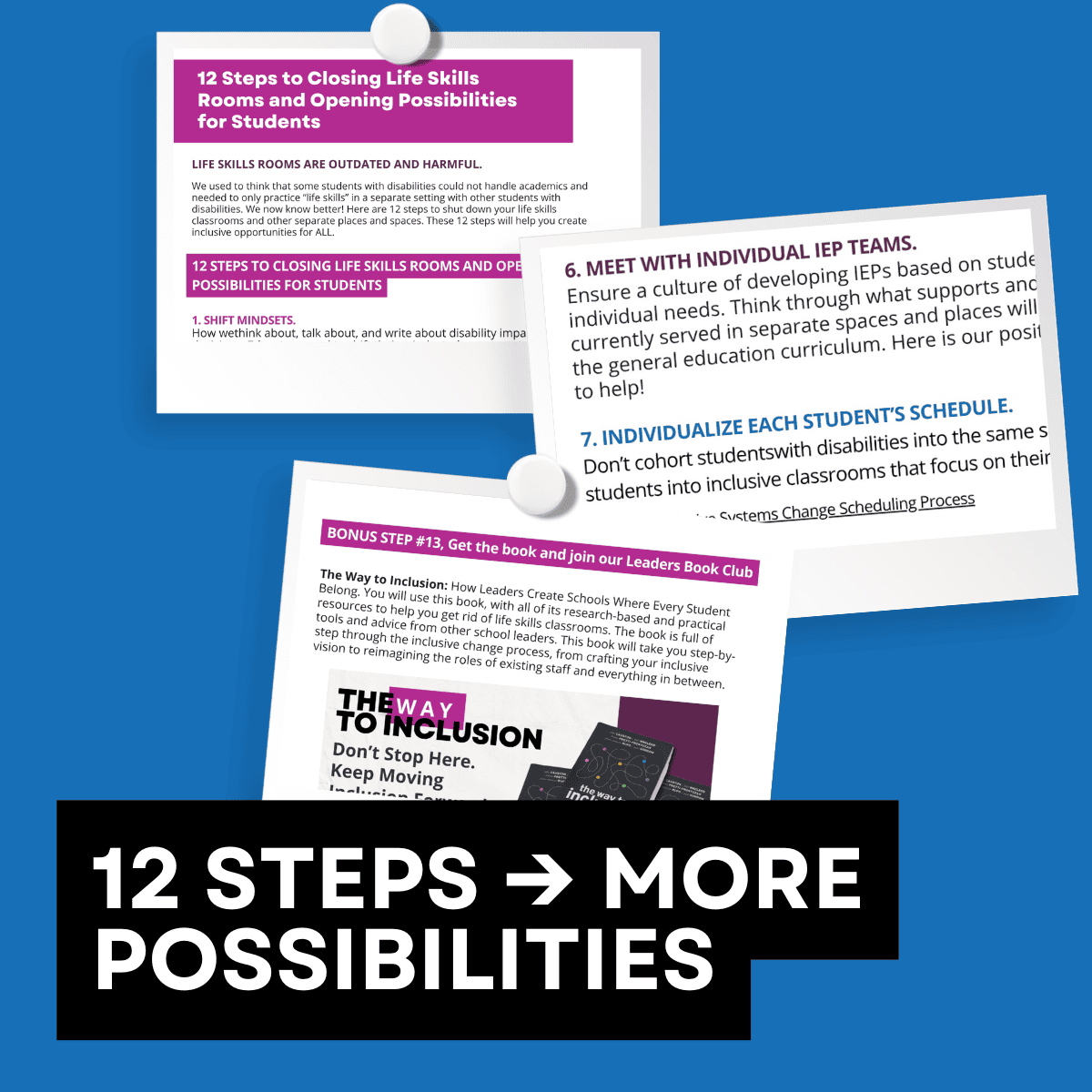
Should schools have life skills classrooms for students with disabilities?
Students with disabilities may need explicit instruction in functional and daily living skills, but those skills do not automatically require a separate classroom. School teams should first consider how skills can be taught in inclusive classrooms, throughout the school, and in authentic community settings while maintaining access to peers and academic learning.
What should school leaders look for when reviewing a life skills program?
Look beyond the program name and examine students’ actual experiences. Consider whether instruction is age-respectful, whether students have meaningful choices, whether they have access to academic content and peers without disabilities, and whether their opportunities for autonomy, relationships, communication, and self-advocacy are increasing.
How can schools teach life skills in inclusive classrooms?
Many functional skills can be taught within everyday academic, school, and community experiences. The leadership task is to identify the skill a student needs and then determine how instruction, accommodations, special education services, and other supports can be brought to the student rather than automatically moving the student somewhere else to receive them.