
School leaders are often asked to respond when a student’s behavior has escalated, someone has been hurt, or a teacher feels they’ve exhausted every option. The conversation usually turns to consequences. What should the student lose? How long should they be removed? What will make sure this doesn’t happen again? But here’s the problem. Many traditional school consequences address what happened without teaching students what to do differently next time.
If our goal is to improve student behavior, strengthen relationships, and reduce repeated discipline incidents, we need to look more closely at what our consequences are actually teaching.
When Consequences Become Punishment
In many schools, consequences and punishment have become interchangeable. A student refuses to work and loses recess. Another uses hurtful language and receives detention. A student hurts a classmate and is sent to the office.
These responses may communicate that a behavior is unacceptable. They may even stop the immediate disruption. But stopping a behavior and teaching a new skill are two very different things.
Consider the student who refuses to complete an assignment. Taking away recess doesn’t necessarily address why the student couldn’t participate. Perhaps the work was overwhelming, the directions were unclear, or the student needed a different entry point.
A more useful response would be to identify the barrier, adjust the support, and help the student reengage with learning. The expectation remains, but now we’re teaching the skills needed to meet it.
Natural and Logical Consequences Aren’t About Lowering Expectations
One of the biggest concerns we hear from school leaders is that moving away from punishment will make schools too permissive.
We see it differently… Natural and logical consequences maintain accountability while creating opportunities to learn responsibility, repair harm, and practice new skills.
When a student hurts someone, we still attend to safety, address the harm, and establish clear boundaries. But we also recognize that a dysregulated student may need adult support before they’re ready to reflect, problem-solve, or make repairs. The sequence matters. We can respond immediately to keep everyone physically and neurologically safe without expecting meaningful reflection in the middle of an escalation. And when the student is ready, we return to the learning that needs to happen.
What School Leaders Can Change About Discipline
We’d encourage leaders to start by examining the consequences most commonly used in their buildings.
Look at office referrals, lost privileges, classroom removals, and detention. Pay particular attention to situations involving refusal, incomplete work, and behavior that disrupts instruction.
Then ask teams to identify the skill each response is intended to teach.
If a student repeatedly loses recess for incomplete work, for example, the team should be able to explain how that consequence improves the student’s ability to organize, initiate, or complete assignments. If it doesn’t, it’s time to reconsider the response.
This is also an opportunity to examine what happens after students return from disciplinary removal. Too often, students reenter the same environment with the same unmet needs and without having learned an alternative way to respond.
Leaders can change that pattern by expecting discipline conversations to include instructional planning, opportunities for repair, and support for educators who are learning to respond differently. The goal isn’t to eliminate consequences. It’s to make sure our responses leave students more capable than they were before the incident.
What is the difference between punishment and logical consequences in schools?
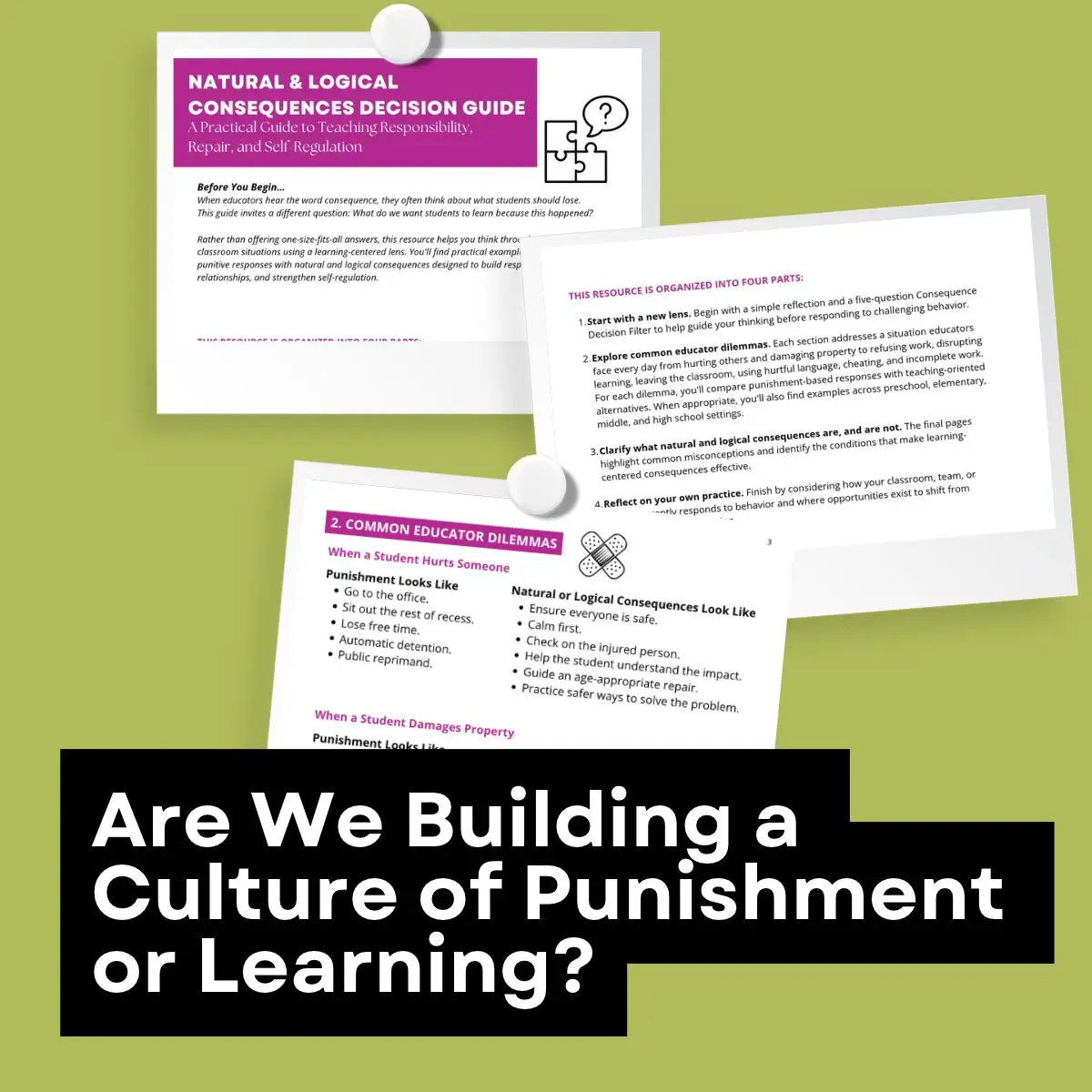
Punishment adds discomfort or removes something desirable in an attempt to change behavior. Logical consequences are directly connected to what happened and help students learn responsibility, repair harm, or practice a needed skill. For example, a student who damages materials may help repair them and practice using them appropriately rather than automatically losing recess.
How can school leaders hold students accountable without punishment?
Accountability includes clear boundaries, attention to safety, addressing harm, and teaching students how to respond differently. School leaders can support this by helping staff identify the skills students need, providing time for co-regulation when necessary, and ensuring students have opportunities to practice and repair rather than simply receive a penalty.
What should administrators do when traditional consequences aren't working?
Start by reviewing the discipline responses used most frequently and whether students are repeating the same behaviors. Examine what happens after a consequence, including whether students receive instruction, support, and opportunities to practice new skills. Use those findings to help teams replace ineffective punishments with responses connected to the behavior and the learning that needs to occur.