
Inclusive education is built on nine essential elements
—think of them as the key ingredients in a recipe
for successful inclusion.
1) Redesign Systems and Structures
that center and value our human diversity, foster strong relationships, and create a true sense of belonging between and among us
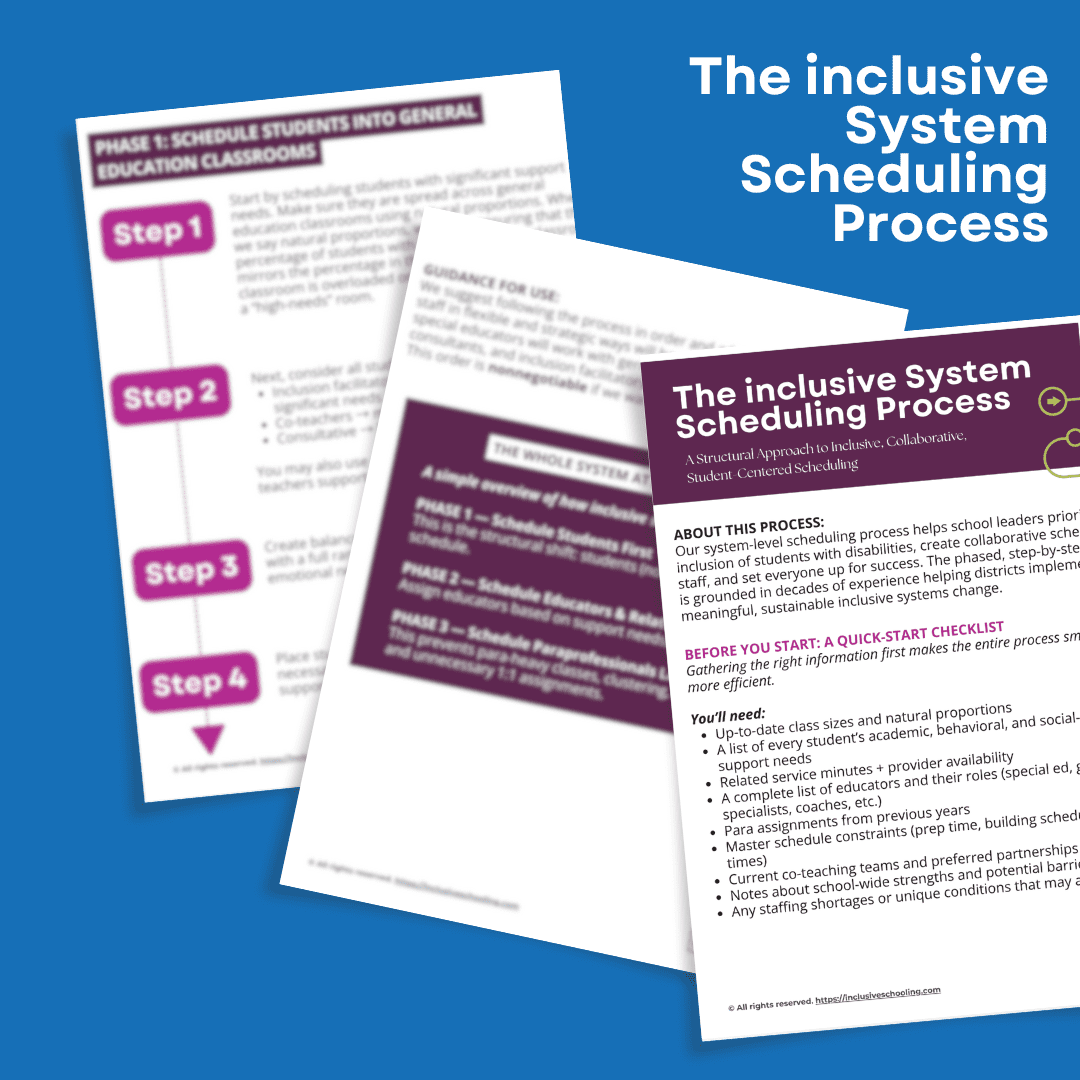
This Inclusive System Scheduling Process supports school leaders in building inclusion into the structure of the school day—not adding it on later. It guides teams to schedule students first, align staff and services to real support needs, and avoid common scheduling patterns that lead to clustering and fragmentation. Designed for real leadership decisions, this process strengthens collaboration, access, and sustainable systems.
2) Prioritize Hiring
diverse and inclusive-minded leaders, creative and compassionate educators, and skillful paraprofessionals
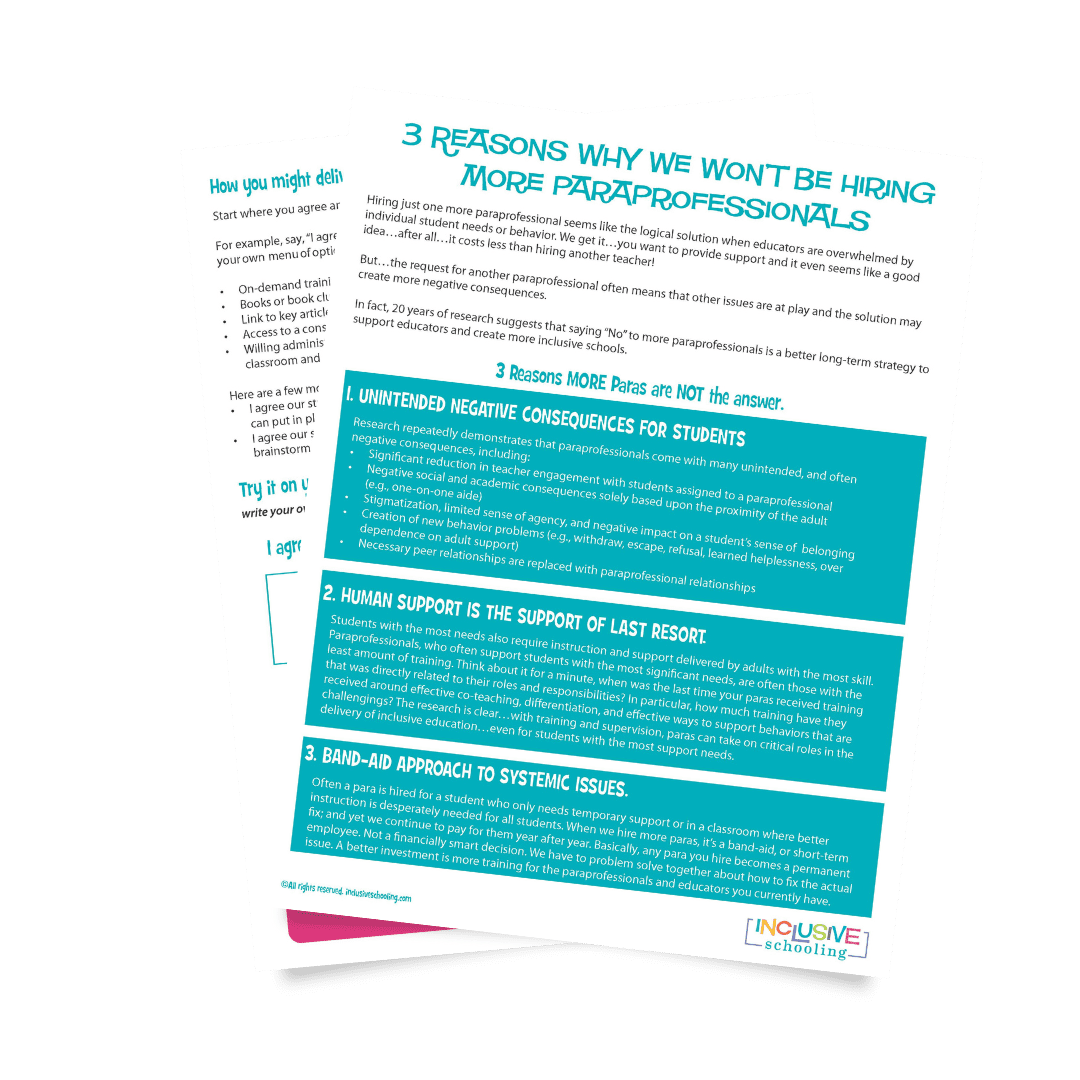
This resource helps leaders rethink how staffing decisions are made and sustained in inclusive schools. It challenges the assumption that adding more paraprofessionals is the solution and instead focuses on role clarity, training, and intentional use of human support. The guidance supports staffing decisions that align with inclusive values and long-term system health.

3) Eliminate Barriers
to students’ access, participation, and learning by abandoning inequitable practices, policies, and procedures
This Rock the Range resource helps leaders and teams identify instructional barriers created by adult systems—not student differences. It supports shifts in planning, expectations, and decision-making so access to grade-level learning is anticipated rather than negotiated. The focus is on removing barriers that limit participation before they appear.
4) Create Welcoming Spaces
where students’ multiple identities are seen and celebrated
This Connection First resource supports leaders and educators in shaping classrooms where students feel known, valued, and emotionally safe. Through practical, age-spanning ideas, it shows how everyday interactions and routines influence whether students experience belonging or exclusion. The resource helps teams build trust-centered environments grounded in connection.

5) CO-TEACH AND COLLABORATE EFFECTIVELY
by sharing instructional roles, designing authentic lessons, and generating joy-filled learning experiences
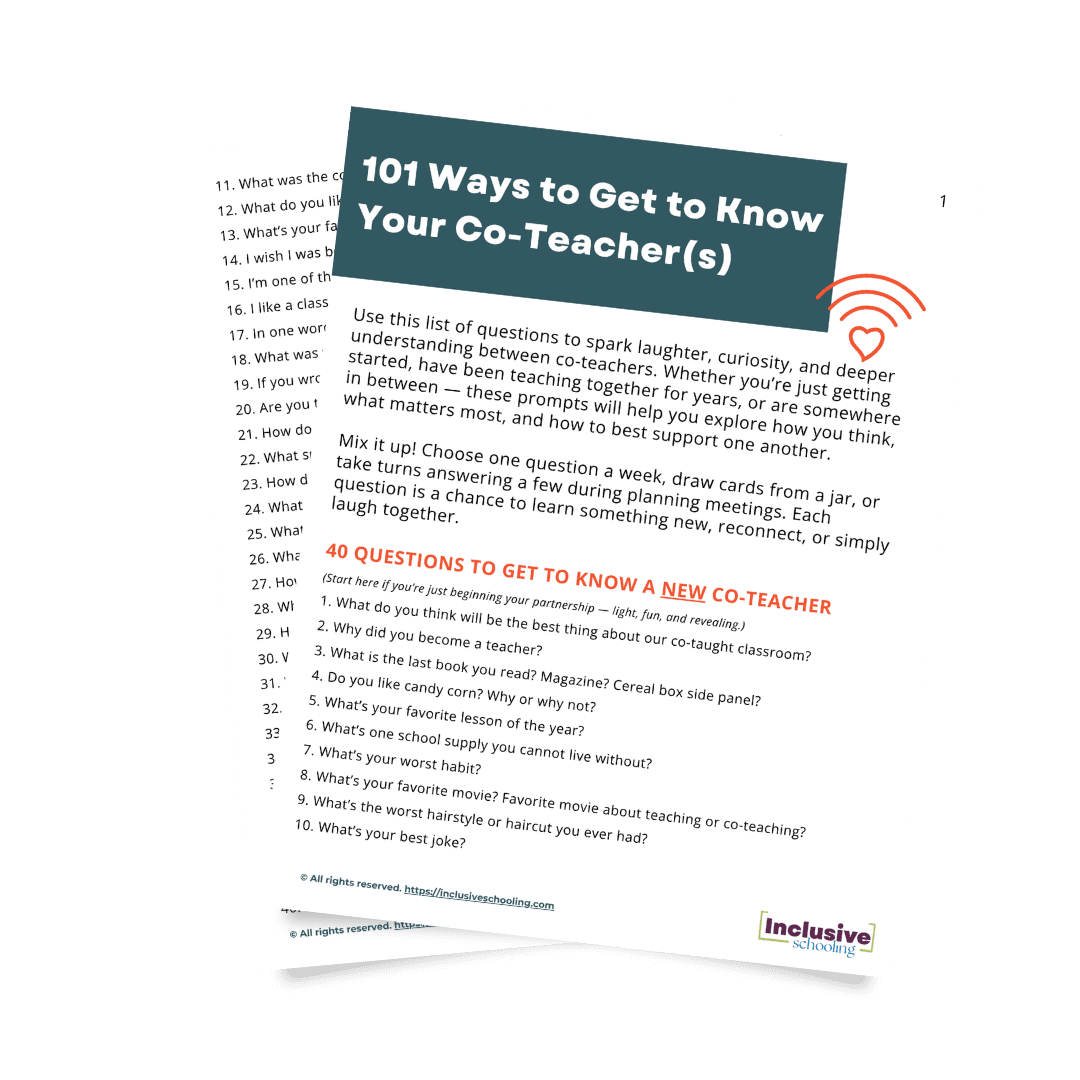
This resource strengthens co-teaching by focusing on the relationships that make collaboration possible. Through structured prompts, it helps co-teachers build trust, clarify communication, and navigate differences in working styles. Stronger partnerships support shared instructional responsibility and more cohesive inclusive practice.
6) Partner with Families
to incorporate their dreams for their children
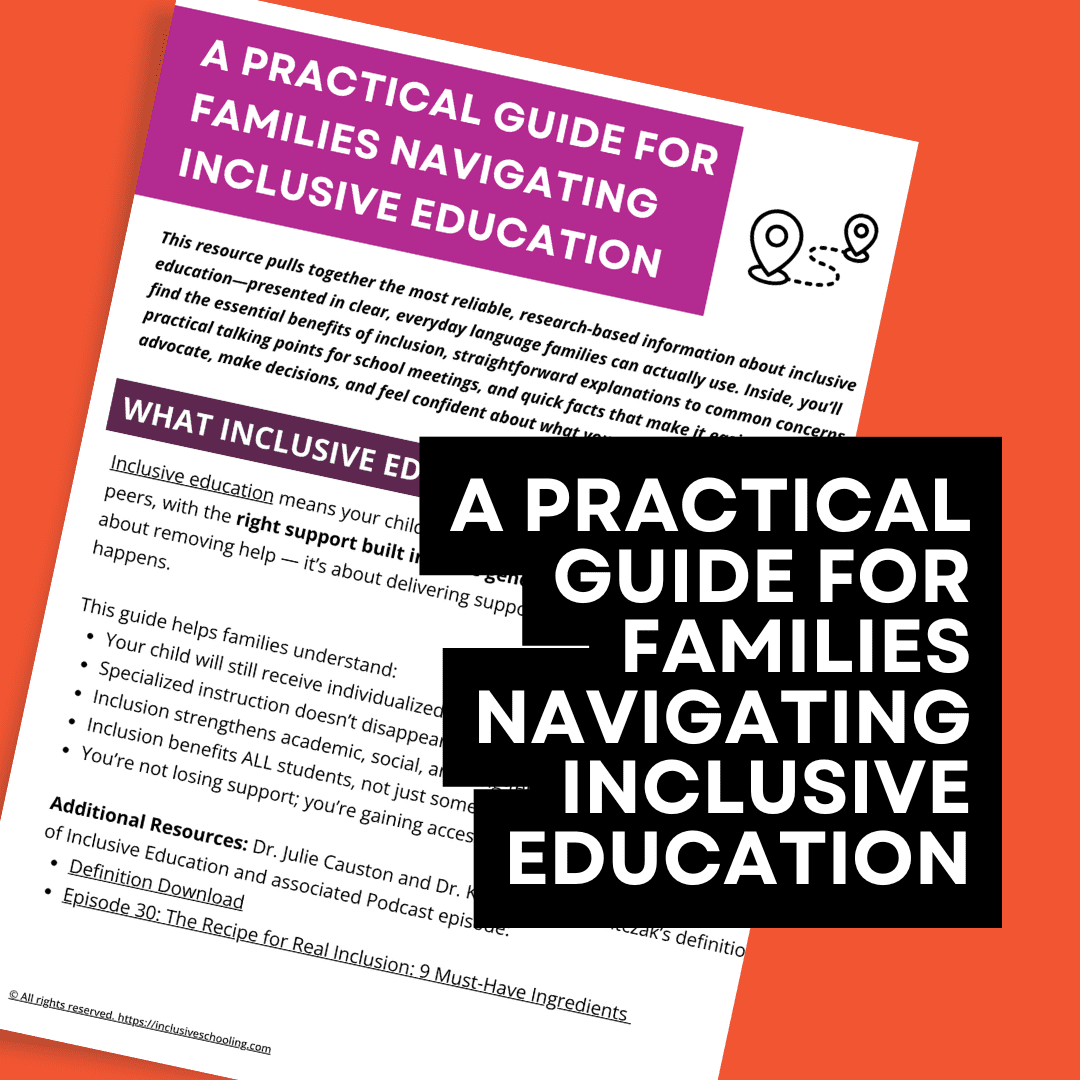
This practical family guide supports stronger school–family partnerships by offering clear, accessible information about inclusive education. When families understand how inclusion works and why it matters, collaboration becomes more productive and aligned. The resource supports conversations centered on belonging, access, and long-term outcomes.

7) DIFFERENTIATE TO CREATE ACCESS POINTS
that allow students to engage in meaningful experiences, share their thoughts and ideas, and demonstrate their competence
This Access Points handout helps teams proactively plan for learner variability across common classroom activities. It offers concrete ways to build multiple entry points for participation, expression, and engagement without lowering expectations. The resource reinforces differentiation as a core instructional practice that expands access to grade-level learning.
8) Provide Additional Support
and enrichment for ALL—continuously and seamlessly—when and where students need it
This Support Is a Verb resource helps teams shift from seeing support as a place or person to understanding it as intentional action. Organized across instructional, environmental, social, and behavioral domains, it shows how support can be built into classrooms rather than added later. The resource reinforces shared responsibility and responsive practice without removing students from learning or peers.

9) UTILIZE CHALLENGING BEHAVIORS
as an opportunity to create warm and safe relationships, reduce stressors, soothe systems, and nurture students’ well-being
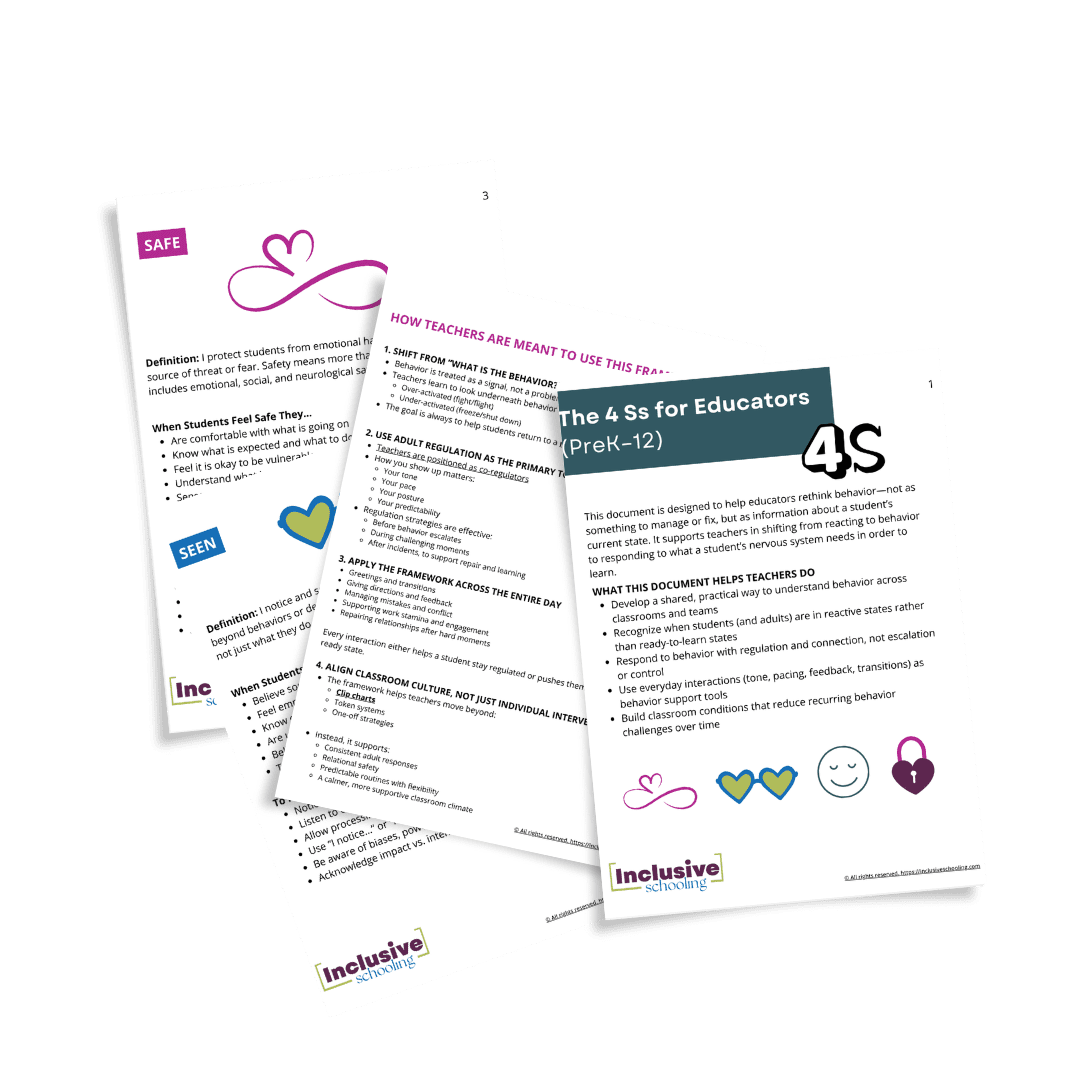
The 4Ss for Educators framework supports teams in responding to challenging behavior through connection, regulation, and relationship. By helping educators recognize student states and use adult regulation as a primary support, it strengthens safety, trust, and readiness to learn. The resource provides a shared approach for reducing stressors and supporting well-being across the school day.
BONUS – Lead with Love
This article offers a compassionate, human-centered framework for rethinking school discipline and support — replacing punitive, one-size-fits-all practices with inclusive, respectful, and relationship-driven approaches. It helps school leaders and educators build a culture of belonging, human dignity, and shared responsibility

Tired of confusion, pushback, or slow progress around inclusion?
Take the clear, actionable step your school needs right now to create truly inclusive classrooms!
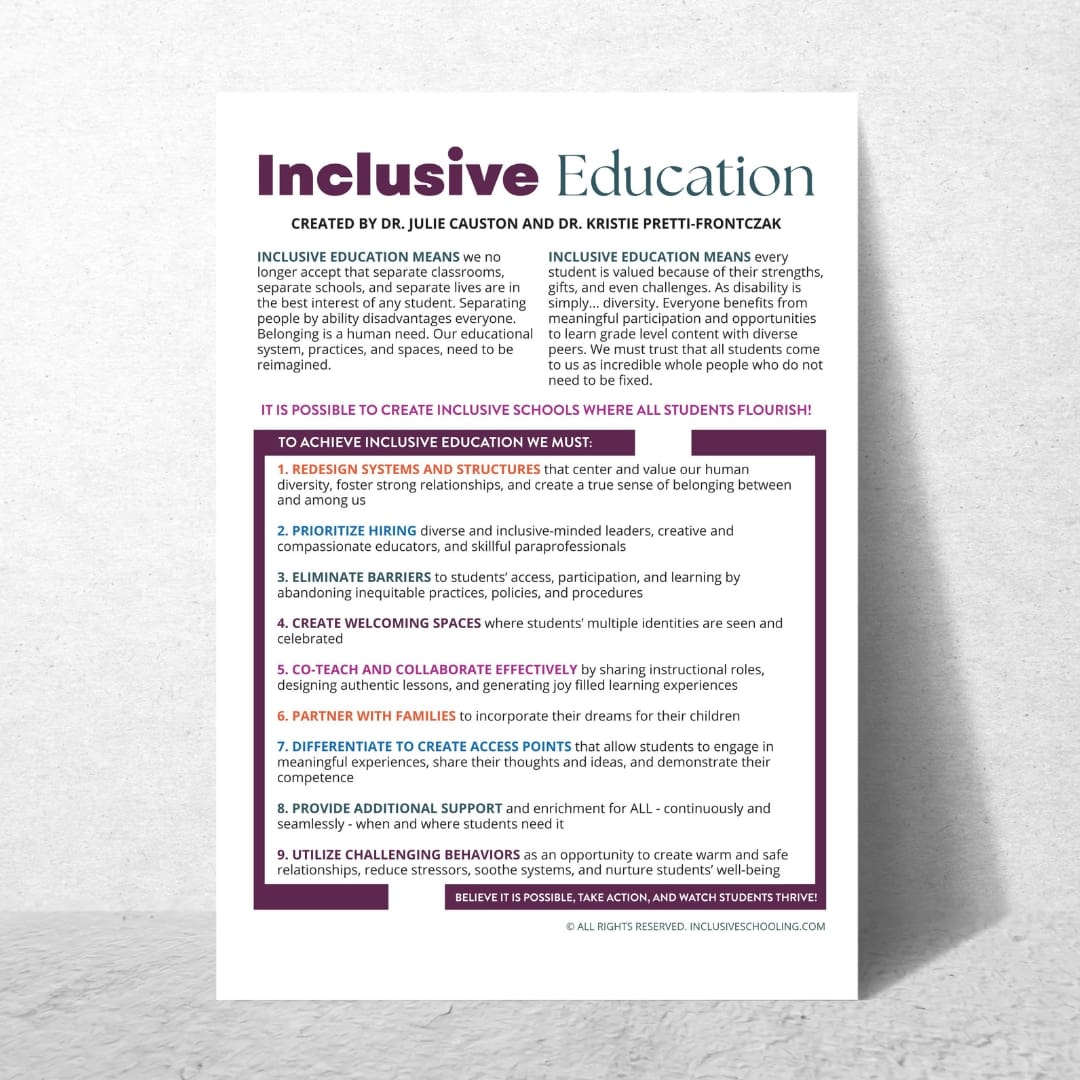
This free handout cuts through the confusion with a clear definition to create schools where every student achieves the desired outcomes.
This resource isn’t just another PDF—it’s your roadmap to making inclusion real, effective, and sustainable.

Listen and Learn:
- How to cut through the confusion with a clear, shared definition of inclusion—essential for aligning staff, families, and teams.
- The nine essential elements needed to tackle common challenges like resistance to change, inconsistent practices, and exclusion.
- Use our definition of inclusive education to lead meaningful conversations and improve classroom practices.
That Actually Work