Read the Room, Regulate Yourself: What to Do When Behavior Escalate
Transcript [pdf]
SHOW NOTES
What This Episode Is About
When emotions rise and behavior escalates, many common responses accidentally make things worse. In this episode, Julie and Kristie share 20 de-escalation strategies that actually work — not rewards, consequences, or power moves, but connection-based actions that help students (and adults) return to a regulated state.
This episode focuses on what to do in the moment, when the heat is turning up and everyone needs calm more than correction.
Key Takeaways
-
- Escalation isn’t just yelling or aggression — it can also look like shutdown, withdrawal, or refusal.
- De-escalation is about turning the heat down, not winning the moment.
- Students (and adults) regulate through co-regulation — they borrow calm from the people around them.
- Correcting, lecturing, or problem-solving during escalation almost always backfires.
- Small, intentional shifts in adult behavior can rapidly change the emotional climate of a room.
- Escalation isn’t just yelling or aggression — it can also look like shutdown, withdrawal, or refusal.
Answering a Common Question
What actually helps de-escalate behavior in the moment?
Connection, not control.
Lowering adult energy, naming emotions, slowing the pace, and signaling safety help the nervous system settle so learning and communication can resume.
Episode Download / Handout
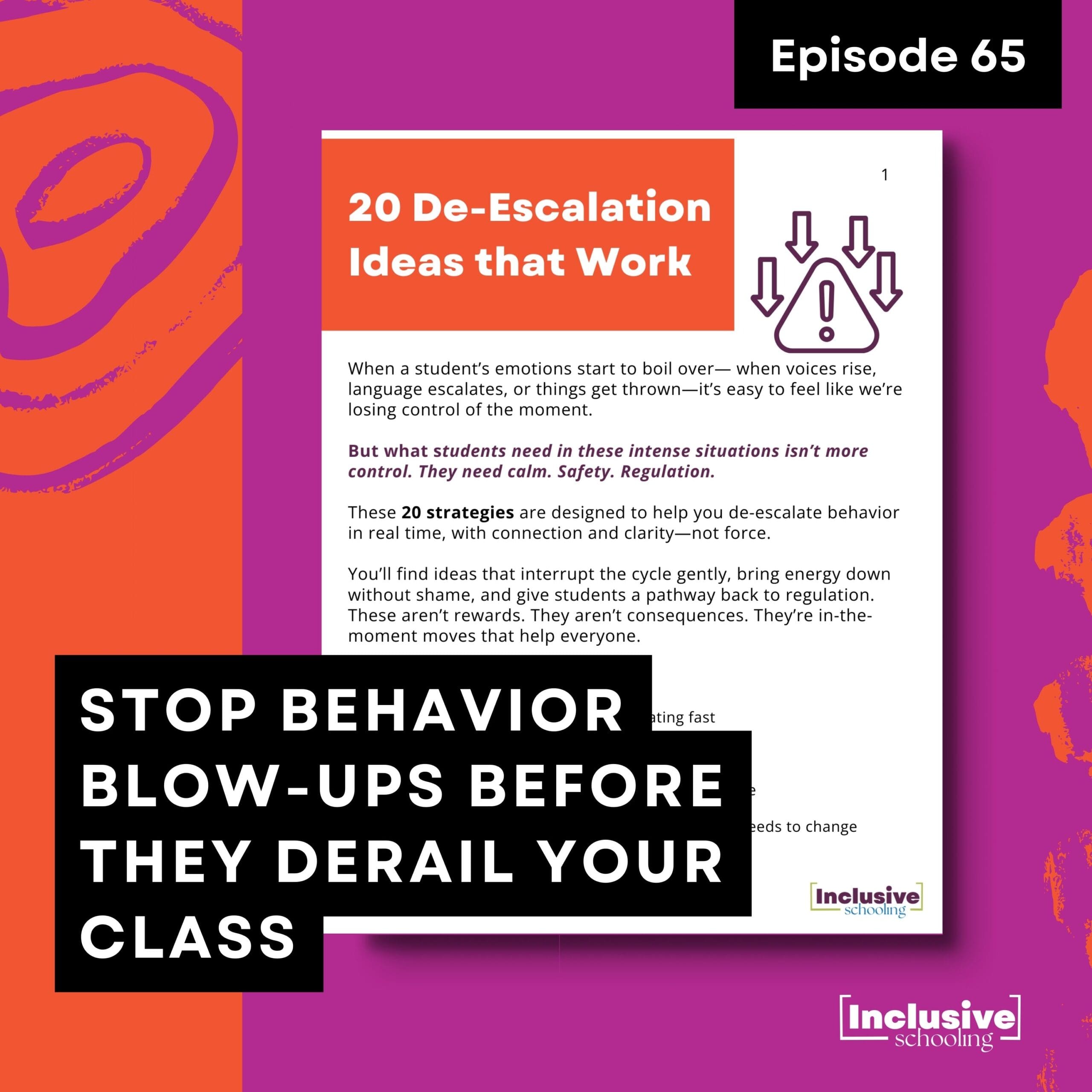
20 De-Escalation Strategies That Work
This practical download gives educators 20 concrete, research-aligned ways to reduce escalation without power struggles, shaming, or punitive responses.
Inside the download you’ll find:
-
- Strategies for calming yourself first
- Language shifts that reduce intensity
- Ways to support students who escalate outward or shut down
- Simple moves that restore safety and connection
- Strategies for calming yourself first
Why download it?
Because when emotions spike, it’s hard to think clearly. This tool gives you a ready-to-use menu of responses so you don’t freeze, react, or escalate alongside students.
👉 Download at inclusiveschooling.com/download65
Practical De-Escalation Moves
-
- Lower your energy before trying to lower a student’s
- Change your tone, pace, and body position
- Name the emotion instead of correcting the behavior
- Respond quietly or with a whisper
- Pause correction and prioritize safety and connection
- Use grounding gestures (like a hand over your heart) to calm your own nervous system
- Lower your energy before trying to lower a student’s