Five Small Moves for a Big Shift in School Culture
Transcript [pdf]
SHOW NOTES
Key Takeaways
-
- Culture may feel huge and hard to change— but small, intentional moves can dramatically shift how a school feels to students, families, and staff.
- Shifting language matters: moving from “You are late” to “We’re glad you’re here” can completely change the emotional tone.
- Cafeterias, hallways, and morning greetings are powerful touchpoints— tiny tweaks in these spaces can increase belonging and readiness to learn.
- Inclusion deepens when we invite student voice, model curiosity, and create opportunities for genuine connection.
- Building inclusive school culture is not about grand initiatives— it’s about consistent micro-moves that send the message: Everyone belongs here.
- Culture may feel huge and hard to change— but small, intentional moves can dramatically shift how a school feels to students, families, and staff.
Culture can feel big— but change starts with the small, daily moments.
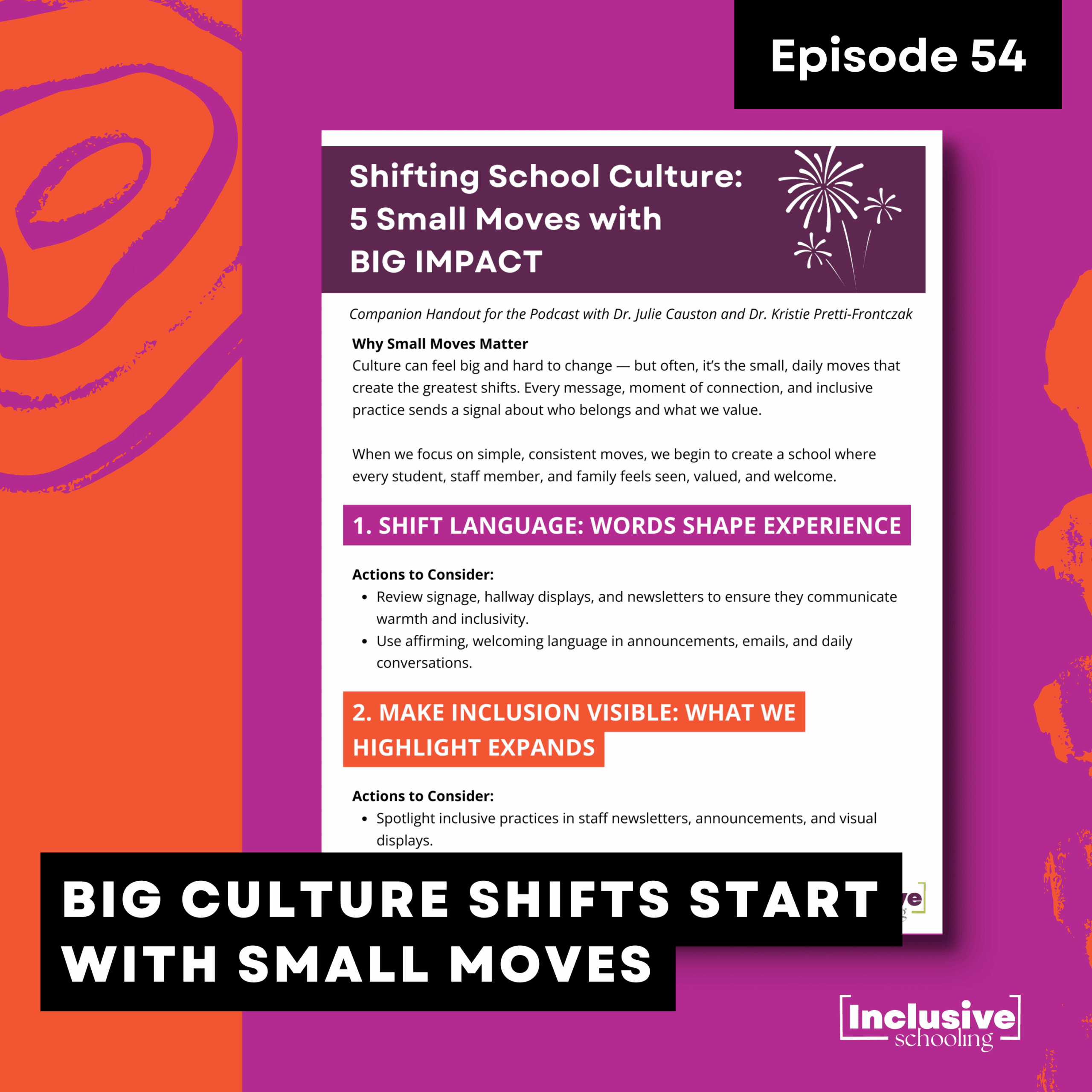
This free companion guide gives you five practical shifts you can make right away to build a more inclusive and welcoming school culture:
-
- Shift Language: Words shape experience.
- Make Inclusion Visible: What we highlight expands.
- Invite Voice and Participation: Foster belonging through engagement.
- Model Co-Learning: Lead with curiosity and openness.
- Create Opportunities for Connection: Build relationships and community.
- Shift Language: Words shape experience.
Download the free handout here
Highlights from the Handout
-
- Julie’s Favorite: Reimagining signage and greetings to affirm and welcome every student, every time they walk through the door.
- Kristie’s Favorite: Creating connection moments— like student-designed cafeteria table tents— that turn everyday routines into opportunities for belonging.
- Julie’s Favorite: Reimagining signage and greetings to affirm and welcome every student, every time they walk through the door.
Practical Tips
-
- Review your school environment: Do signs, announcements, and hallway displays communicate warmth and inclusivity— or stress and compliance?
- Try a five-minute problem-solving session with staff or students to reframe unhelpful practices into welcoming ones.
- Involve students directly— they often have the best ideas for connection, interest-based seating, and inclusive routines.
- Celebrate small wins: every word, sign, and greeting contributes to a larger shift in school culture.
- Review your school environment: Do signs, announcements, and hallway displays communicate warmth and inclusivity— or stress and compliance?
Bonus Resource
The Inclusive Education Compass offers a clear framework for advancing inclusion through three guideposts: Mindset (what we believe), Heartset (what we feel), and Skillset (what we do). It encourages educators to align beliefs with inclusive values, nurture relationships of care and belonging, and build practical skills for collaboration, differentiation, and creativity. Designed as both a reflective and action-oriented tool, the Compass can guide professional learning, school culture audits, goal-setting, shared language, and ongoing reflection— helping schools move from vision to action in creating equitable, joyful, and inclusive learning environments.