
Behavior challenges are draining staff energy, stalling lessons, and making inclusion feel impossible. You’ve rolled out PBIS, SEL, and MTSS. You’ve invested in PD. And yet, behavior is still the number one issue that keeps showing up at your desk.
It’s not because your staff doesn’t care. It’s because the systems, mindsets, and tools aren’t aligned.
Why Leaders Feel Stuck
- Outdated practices are still running the show. Behavior charts, detentions, suspensions, and seclusion may look like “management,” but they don’t create lasting change.
- PD doesn’t stick. One-off workshops without follow-up leave teachers confused and resistant. Mixed messages like “Ignore it!” vs. “Be relational!” create frustration instead of clarity.
- Staff are overwhelmed. With no shared language or consistent system, educators fall back on what they know—even if it doesn’t work.
What Actually Works
When it comes to behavior, the old playbook fails. What does work is rooted in brain science and inclusive practices:
- Behavior is communication, not defiance. Students aren’t making “bad choices”—they’re signaling unmet needs.
- Connection and belonging drive sustainable change. Punishment may stop behavior in the moment, but only relationships reshape it long term.
- Mindset shifts matter. Moving from “What’s wrong with this student?” to “What does this student need right now?” changes everything.
- Systems create consistency. When staff share language and tools, resistance turns into confidence and collaboration.
A Free Resource for Leaders
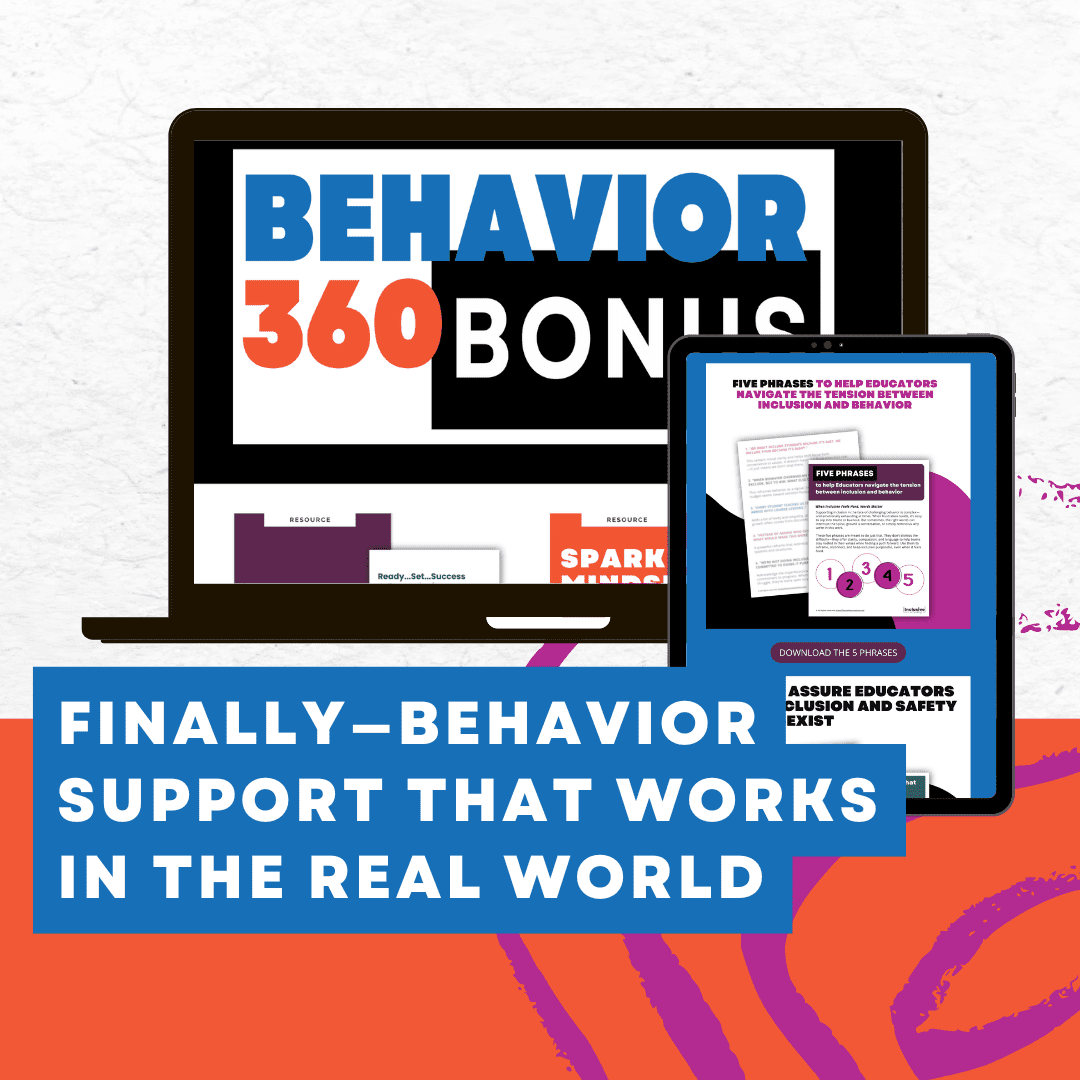
To help school leaders move from theory to practice, we’ve created the Behavior 360 Bonus Dashboard—a free collection of tools you can put in front of your team tomorrow. Inside you’ll find:
- A ready-to-use T-chart outlining what works vs. what doesn’t
- Ten mindset shifts that reset your staff’s approach to behavior
- Quick, brain-based strategies and scripts to calm chaos in the moment
- On-demand videos and printable tools you can use in staff meetings or PLCs
This isn’t another initiative. It’s a reset button.
Why This Matters
As a leader, you’re juggling endless priorities. The last thing you need is one more program that fizzles after a week. The reset your staff is waiting for isn’t about doing more—it’s about doing differently. Aligning systems, language, and tools gives everyone the clarity and confidence to support students well.
When schools reset their approach to behavior, they don’t just reduce disruptions—they create inclusive school cultures where students feel safe, staff feel supported, and learning can actually happen.
🎧 Listen to the special episode The Behavior Reset Every School Leader Needs and access your free Behavior 360 Bonus Dashboard here:
Why does it feel like nothing changes even after we try behavior charts, suspensions, or PBIS?
Because traditional behavior-management tools (charts, detentions, suspensions, seclusion) and even one-off professional development sessions often rely on outdated assumptions — and they don’t address root causes. What actually works is shifting the approach: seeing behavior as communication rather than defiance, using consistent language and shared tools across staff, and offering relational supports rooted in understanding.
How can we change our school’s behavior approach so that it supports inclusion instead of fueling conflict?
- Shift the mindset: move away from asking “What’s wrong with this student?” toward “What does this student need right now?”
- Adopt brain-science and inclusion-based practices: interpret behavior as communication of unmet needs, build connection and belonging, and emphasize relationships over punishment.
- Create consistent, school-wide systems and shared language — when all educators use the same tools and approaches, the community gains clarity and ownership, making inclusion more sustainable.
If traditional discipline isn’t working, what concrete tools or support does the article recommend instead?
Ready for more? checkout the Behavior 360 Dashboard. These tools provide a practical “reset button” — helping schools move from sporadic, reactionary discipline toward more consistent, relational, and inclusive behavioral support.