
Every school leader knows relationships are essential—but with the pace of modern education, connection can feel like one more impossible task. Between testing deadlines, staff shortages, and behavior referrals, “building relationships” often gets pushed to next week’s to-do list.
But here’s the truth: trust doesn’t require hours. It requires intentional seconds.
That’s the focus of The Inclusion Podcast, Episode 59, where Dr. Julie Causton and Dr. Kristie Pretti-Frontczak remind leaders that the foundation of inclusive schools isn’t built through long meetings or elaborate systems—it’s built through mini moments.
These small, meaningful interactions calm nervous systems, communicate belonging, and strengthen the fabric of school culture.
The Myth of “No Time for Connection”
Teachers don’t need a new initiative to build relationships. They need permission.
When leaders normalize connection as part of instruction—not something separate or “extra”—they make it sustainable.
Mini moments can be as simple as:
- A quiet “I’m glad you’re here” during arrival
- A one-minute check-in before a lesson
- A sticky note that says, “You matter to this classroom.”
- A “fist-to-five” pulse check to gauge emotional readiness
These gestures take seconds, but their impact lasts all day. They don’t interrupt learning—they enable it.
How Leaders Can Multiply Mini Moments
- Model Them
Connection starts with leadership. Open staff meetings with a brief check-in, end with a gratitude circle, or use “rose, thorn, bud” reflections. When leaders show that connection is part of the culture, teachers follow suit.
- Normalize Them
Inclusion isn’t another box to check—it’s a way of being. Encourage educators to weave short check-ins into their lessons, advisory periods, and transitions. Connection tools belong in instruction, not in addition to it.
- Protect Them
Burnout decreases when educators feel seen and valued. Create space for moments of presence. When staff know it’s safe to pause, breathe, and connect, they bring that same calm to their classrooms.
When schools protect connection, dysregulation decreases, behavior improves, and belonging grows.
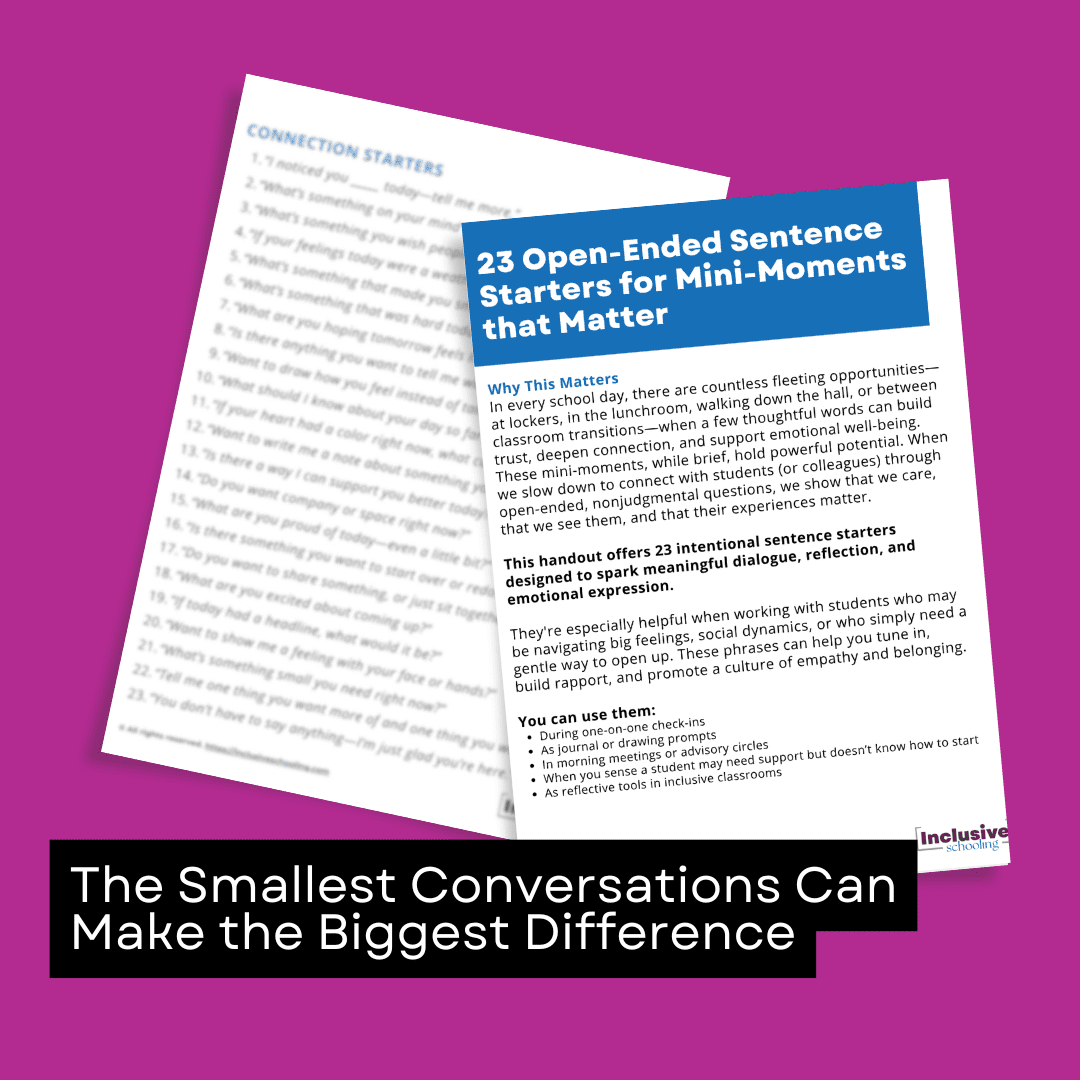
Free Resource: 23 Mini Moments That Matter
To make connection simple and actionable, we’ve created Mini Moments That Matter—a free handout with 23 open-ended prompts that educators can use throughout the day.
You’ll find ideas like:
- “I noticed you ___ today—tell me more.”
- “What are you hoping tomorrow feels like?”
- “Do you want company or space right now?”
- “If your feelings were a weather report, what would it be?”
Each phrase is short, emotionally safe, and designed to build trust without losing instructional time.
👉 Download your free Mini Moments That Matter guide here.
Why This Matters for School Leaders
Your staff doesn’t need more mandates—they need models of care.
When you lead with mini moments, you send a powerful message: inclusion isn’t a theory; it’s a daily practice.
💡 Connection is not a distraction from learning—it’s the condition for it.
How can school leaders make time for connection in busy school days?
Connection doesn’t require extra time—it requires intention. Mini moments are short, meaningful interactions that fit naturally into daily routines: a greeting in the hallway, a quick check-in before class, or a kind word during dismissal. When leaders model connection as part of the workday, it becomes embedded in school culture rather than added to it.
What are examples of mini moments that build trust in classrooms?
Mini moments are brief exchanges that communicate safety, belonging, and care. Examples include asking, “How are you feeling about today?” or leaving a note that says, “I’m glad you’re here.” These gestures take seconds but can de-escalate stress, strengthen trust, and help students (and staff) regulate.
Why should school leaders focus on small moments instead of large initiatives?
Because lasting change happens in relationships, not programs. When teachers feel seen, valued, and supported, burnout decreases and collaboration grows. Small, consistent interactions build the emotional safety that makes every other initiative—academic or behavioral—more successful.