
When emotions rise and behavior escalates, the pressure on educators is immediate. Voices get louder. Tension fills the room. And adults feel an urgent need to do something, often quickly, and often forcefully.
But escalation doesn’t call for control.
It calls for de-escalation.
The most effective leaders know this: behavior settles when nervous systems feel safe. And safety is created through calm, connection, and intentional adult responses, not consequences delivered in the heat of the moment.
Why Common Escalation Responses Backfire
Many traditional responses accidentally turn the heat up:
- Correcting or lecturing in the moment
- Raising adult voice or energy to “match” the student
- Issuing consequences while emotions are still high
When a student is escalated, their brain is not available for reasoning or learning. Pushing for compliance at that point often leads to power struggles, shutdown, or bigger explosions.
De-escalation works differently. It focuses on restoring safety first, so regulation and learning can return.
What De-Escalation Actually Looks Like in Practice
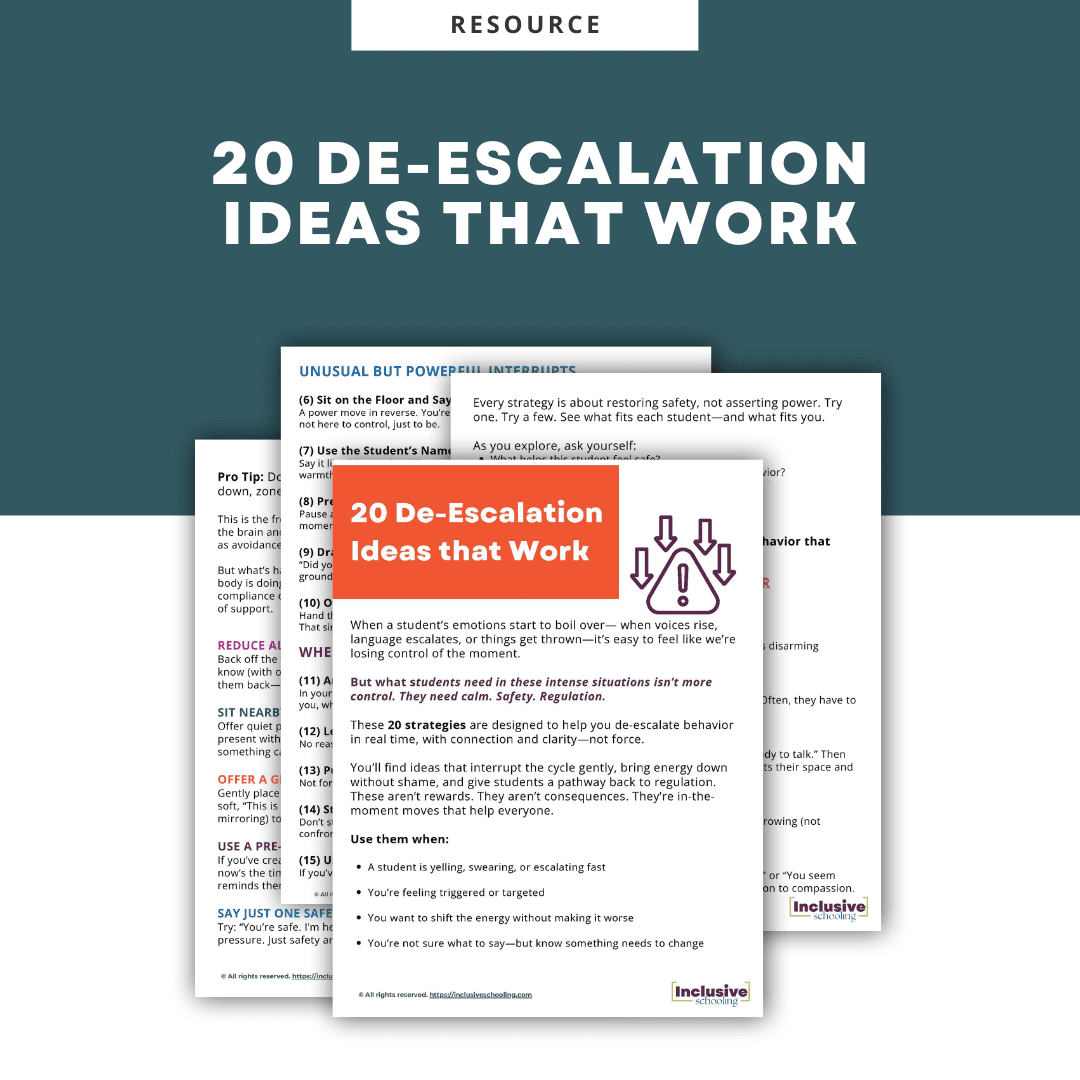
Effective de-escalation strategies are connection moves, not rewards or punishments. They help students (and adults) borrow calm until the nervous system settles.
Leader-level practices that matter most:
Lower adult energy before trying to lower student behavior
When adults slow their tone, soften their posture, and reduce verbal demands, students often follow. Regulation is contagious.
Name emotions, not behavior
Saying “This looks overwhelming” or “You seem really frustrated” shifts the interaction from confrontation to understanding, and helps students feel seen.
Prioritize presence over correction
In intense moments, safety matters more than teaching a lesson. Correction can wait. Connection cannot.
Use quiet, simple language
Whispering, using one calm sentence, or offering a choice reduces stimulation and disarms escalation.
Support adult regulation, too
When educators ground themselves, hands on heart, steady breathing, slowing pace, they stabilize the entire room.
Why This Matters for School Leaders
Your staff looks to you for cues about what matters most. When leaders reinforce de-escalation as a skill, not a weakness, staff gain confidence instead of fear.
Strong systems don’t ask educators to “handle it better.”
They give them clear, usable tools for moments when thinking is hardest.
What actually helps de-escalate behavior in the moment?
Connection. Lowering adult energy, naming emotions, slowing the pace, and signaling safety help nervous systems settle so communication can resume.
Should consequences happen during escalation?
No. When emotions are high, correction and consequences usually escalate behavior further. Safety and regulation must come first.
Is de-escalation “letting students get away with it”?
No. De-escalation is about restoring regulation so accountability can happen later—when students are capable of reflection and repair.