

Student praise is one of the most common tools educators use to encourage learning. But when praise becomes automatic or overly generic, it can unintentionally create dependence on adult approval rather than helping students build confidence and independence.
Walk into almost any classroom and you’ll hear it:
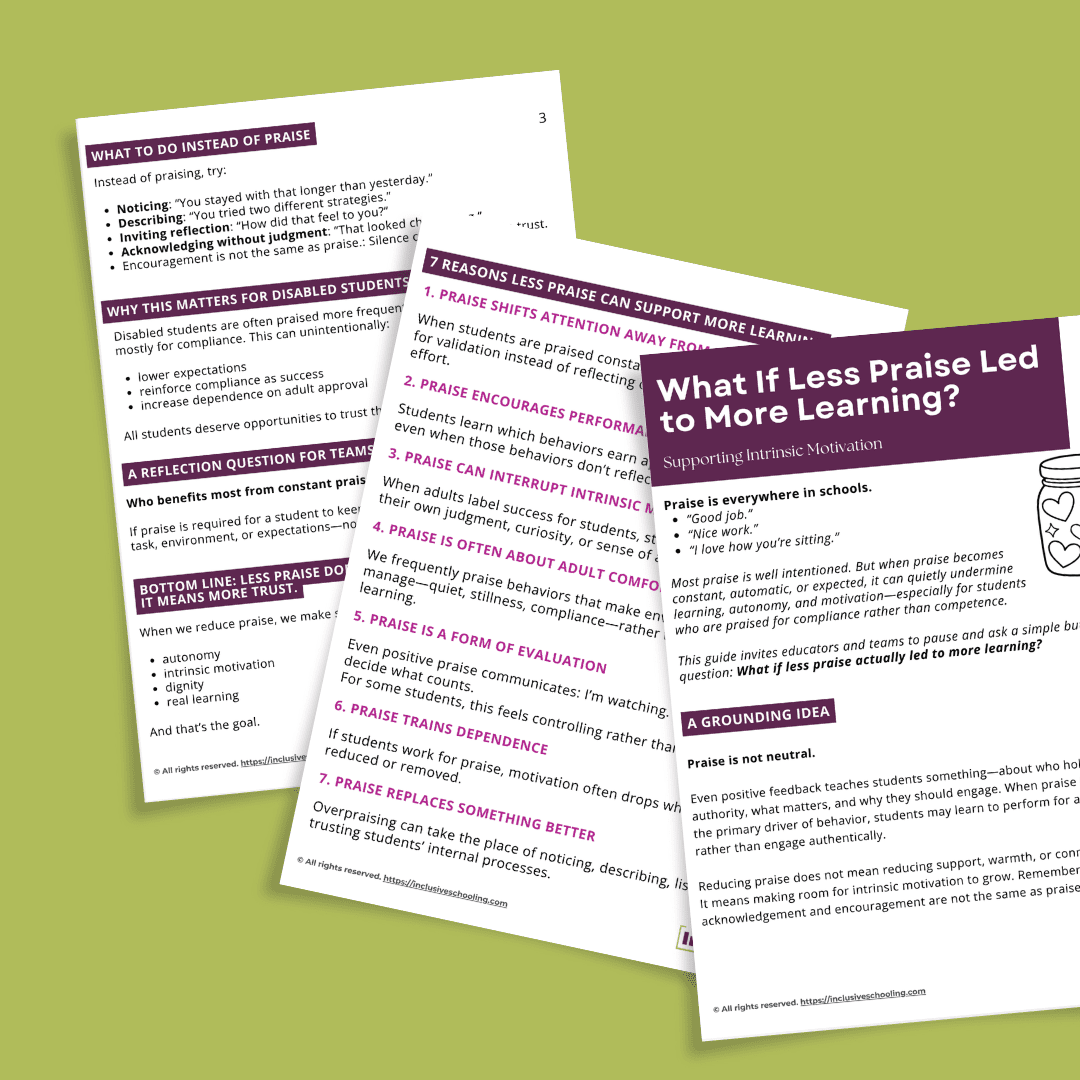
“Good job.”
“Nice work.”
“I love how you’re sitting.”
It sounds supportive.
But here’s the tension: The more praise we hear, the more students start working for approval instead of learning.
Praise isn’t neutral.
It teaches students who decides what counts, and why they should engage.
Over time, students shift from “What did I learn?” to: “Did I do it right?”
When praise becomes constant:
- Students perform instead of engage.
- They wait for feedback to keep going.
- They repeat what earns approval, not what builds understanding.
More praise may feel like more support… but it often creates more dependence. And less praise does not mean less care.
It means more space for:
- thinking
- reflection
- internal motivation
In your next walkthrough, listen for praise. Not whether it’s positive. But what it’s reinforcing.
Then shift one thing with your team… Instead of praising, invite them to start noticing.
“You stayed with that longer.”
“You tried a different strategy.”
“How did that feel?”
One Question to Bring to Your Team
Who benefits most from constant praise, and who might it limit?
If a student needs praise to keep going, don’t just increase praise.
Look at the task.
Does reducing praise mean we stop encouraging students?
No. It means we shift how we respond. Encouragement focuses on noticing effort, inviting reflection, and building independence instead of evaluating performance.
Why can too much praise be a problem?
Because it shifts motivation outward. Students begin working for approval instead of developing their own sense of understanding and progress.
What should teachers say instead of “good job”?
Focus on what you see and what the student is doing. Notice effort, describe strategies, or ask a reflection question. This keeps the focus on learning instead of approval.