
from Dr. Kristie Pretti-Frontczak
& dr. Julie Causton
Inclusive Education Blog for Teachers
and School Leaders
This inclusive education blog is designed for teachers, school leaders, and support staff who are committed to building more inclusive classrooms. Inside this inclusive education blog, you’ll find practical strategies, behavior support tools, co-teaching insights, and leadership ideas you can use right away.
Latest Posts from Our Inclusive Education Blog:
How to Explain Inclusion to Families (Without Sparking Panic or Pushback)
Let’s be real: You’ve done the PD. You’ve prepped your staff. You’re ready to move away from old-school special ed models and toward more inclusive services. But now you’re facing the hardest part: helping families understand what’s changing—and why it’s actually...

How Inclusive Classrooms Handle Challenging Behavior
If you're a school leader feeling overwhelmed by the increasing behavioral challenges in your school, you're not alone. Traditional behavior management strategies—such as clip charts, point systems, and punitive measures—often fall short, leaving educators...

Understanding Legally Defensible IEPs: What the Endrew F. Supreme Court Decision Means (and Why It Still Matters)
Did you know that on March 22nd, 2017, in an 8-0 ruling in the case of Endrew F. v. Douglas County School District, the U.S. Supreme Court clarified that under the Individuals with Disabilities Education Act (IDEA) an Individualized Education Program (IEP),...

The Resource Room Myth: Why It’s Time to Rethink Segregated Supports
In this episode, Julie and Kristie take a critical look at resource rooms and why they often fall short of supporting students with disabilities. From social isolation to lowered expectations, they discuss the real-world challenges and myths surrounding these segregated supports. You’ll also learn actionable strategies for providing portable, inclusive supports within general education classrooms, promoting both academic success and belonging for all students.

But What Will They Get Out of This Class? Why That’s the Wrong Question
If you’ve ever heard someone say, “But what will they get out of this class?” in reference to a student with a disability, you’re not alone. The question may come from concern, but it often signals a much bigger issue: a higher standard being unfairly applied to...

Beyond Placement: What Real Inclusion Looks Like in Today’s Schools
When school leaders say “inclusion doesn’t work,” we often discover they’re using a definition that’s… off. Maybe even unrecognizable. That’s because inclusion isn’t a plug-and-play program or a scheduling fix—it’s a complete shift in how we see, value, and serve...

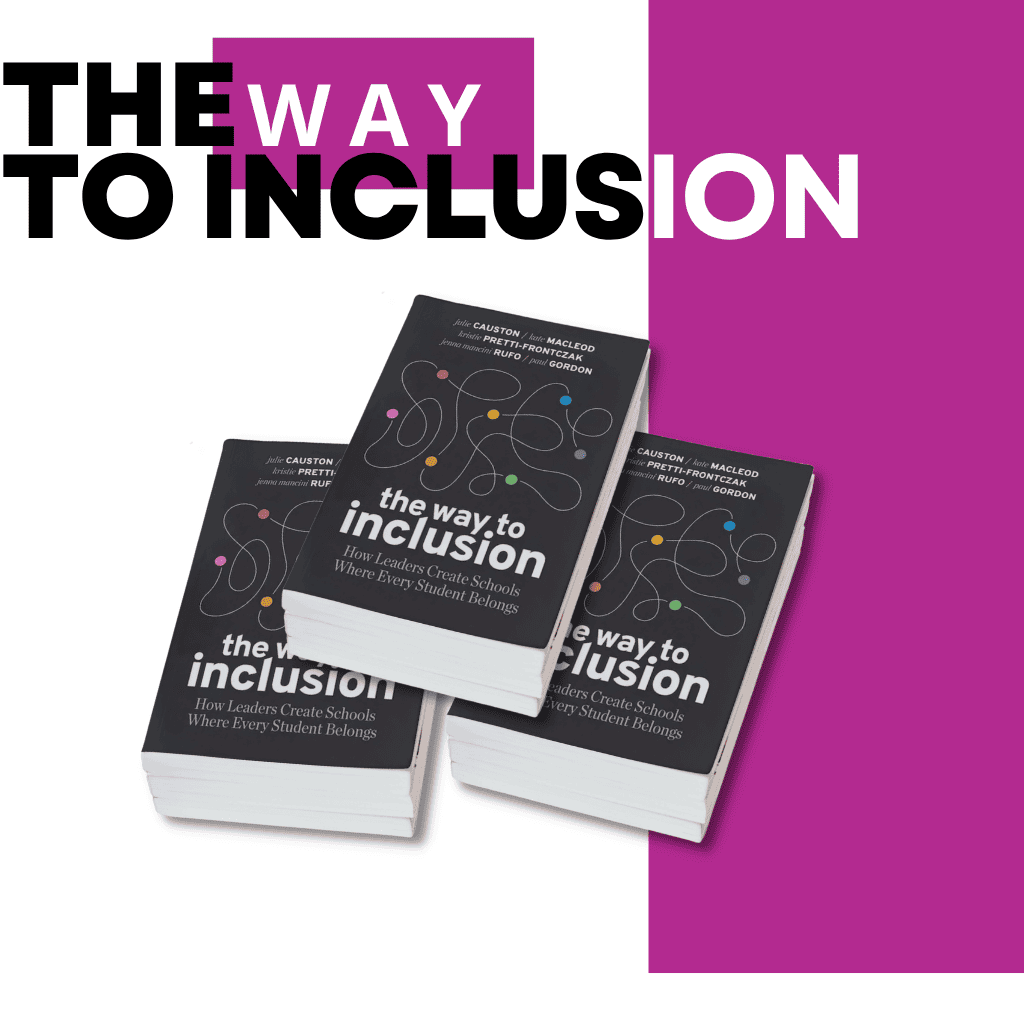
You Can’t Skip Steps in The Way to Inclusion
A 5-part virtual leadership book club that helps teams move past resistance, unclear definitions, and stalled inclusion efforts with a clear, practical roadmap.
JAN 13 • JAN 20 • JAN 27 • FEB 3 • FEB 10 (2027)
FREE Workshop:
Transform Your School with Inclusive Practices
How often do you hear questions like, “But HOW do we actually do it?” or “How do we move from theory to action and make inclusion a reality?”
We’ve got the answers! Join nationally recognized inclusion experts, Dr. Julie Causton and Dr. Kristie Pretti-Frontczak, for a FREE interactive workshop where we’ll tackle outdated special education practices, reveal three powerful classroom strategies, and share the real transformation of a school that fully embraced inclusion.
What Will I Learn?
-
- Overcome Resistance to Change: Tackle emotional and structural challenges to implementing inclusion successfully.
- Shift Mindsets and Inspire Action: Motivate your team to embrace new perspectives and practices.
- Clarify LRE and Service Models: Demystify Least Restrictive Environment and streamline service delivery for all students.
- Instant Resources: Leave with tools you can implement immediately to create more equitable and effective classrooms.
- Overcome Resistance to Change: Tackle emotional and structural challenges to implementing inclusion successfully.
Plus, get exclusive workshop pricing for Inclusion-Bytes—a professional development resource packed with 100s of practical and effective strategies for general and special education teachers about HOW to create inclusive classrooms!

Inclusive Education FAQs for Teachers and School Leaders
What is inclusive education?
Inclusive education is an approach where all students learn together in the same classroom, with the support and strategies they need to succeed. It focuses on access, participation, and belonging for every learner.
What are examples of inclusive classroom strategies?
Examples include co-teaching, differentiated instruction, behavior supports, and creating flexible learning environments that meet diverse student needs.
→ Read our co-teaching strategies blog
→ Explore behavior support strategies
Why is inclusive education important?
Inclusive education helps improve outcomes for all students by building stronger communities, increasing engagement, and supporting diverse learning needs in meaningful ways.