
from Dr. Kristie Pretti-Frontczak
& dr. Julie Causton
Inclusive Education Blog for Teachers
and School Leaders
This inclusive education blog is designed for teachers, school leaders, and support staff who are committed to building more inclusive classrooms. Inside this inclusive education blog, you’ll find practical strategies, behavior support tools, co-teaching insights, and leadership ideas you can use right away.
Latest Posts from Our Inclusive Education Blog:
How Inclusive Classrooms Use Fewer Directions
If you’ve ever walked into a classroom and felt like your staff was narrating every move (“Eyes on me! Get in line! Did you hear what I said?”), you’re not imagining things. In fact, the average student with a disability hears more directions and corrections per...

What to Say When Someone Questions Inclusion
You’ve heard it. That comment muttered in staff meetings or quietly voiced by concerned parents:
“But inclusion isn’t fair to the other students.”
As a leader responsible for creating more equitable and effective educational environments, this comment hits a nerve—and rightly so. But instead of getting defensive or defeated, let’s talk about what you can say and do to move the conversation (and your culture) forward.

Using Assessment Activities in Early Childhood: Making Play, Instruction, and Assessment Synonymous
Assessing young children is a challenging yet essential task. Educators and service providers are often overwhelmed with caseloads, tight deadlines, and extensive assessment checklists. At the same time, research and best practices emphasize the importance of...

Rethinking Behavior Management
Why do we still use behavior charts when they often do more harm than good? It’s a bold question, but one that educators and caregivers must grapple with. Behavior charts—a common tool in classrooms—aim to give feedback and improve decision-making. However, the...

5 Testing Mistakes That Put Children At Risk
In education, terms like “assessment” and “progress monitoring” are often used in place of “testing.” Yet, under the continued pressures of accountability, testing has become a prevalent part of education. Policies like No Child Left Behind (2001) [now Every...

What Makes a Goal IEP-Worthy? A Step-by-Step Breakdown
Creating an IEP (Individualized Education Program) goal isn't just about identifying a student's needs; it's about determining which of those needs are truly IEP worthy. In this post, we'll dive into a case study about typing skills for a third grader and explore...

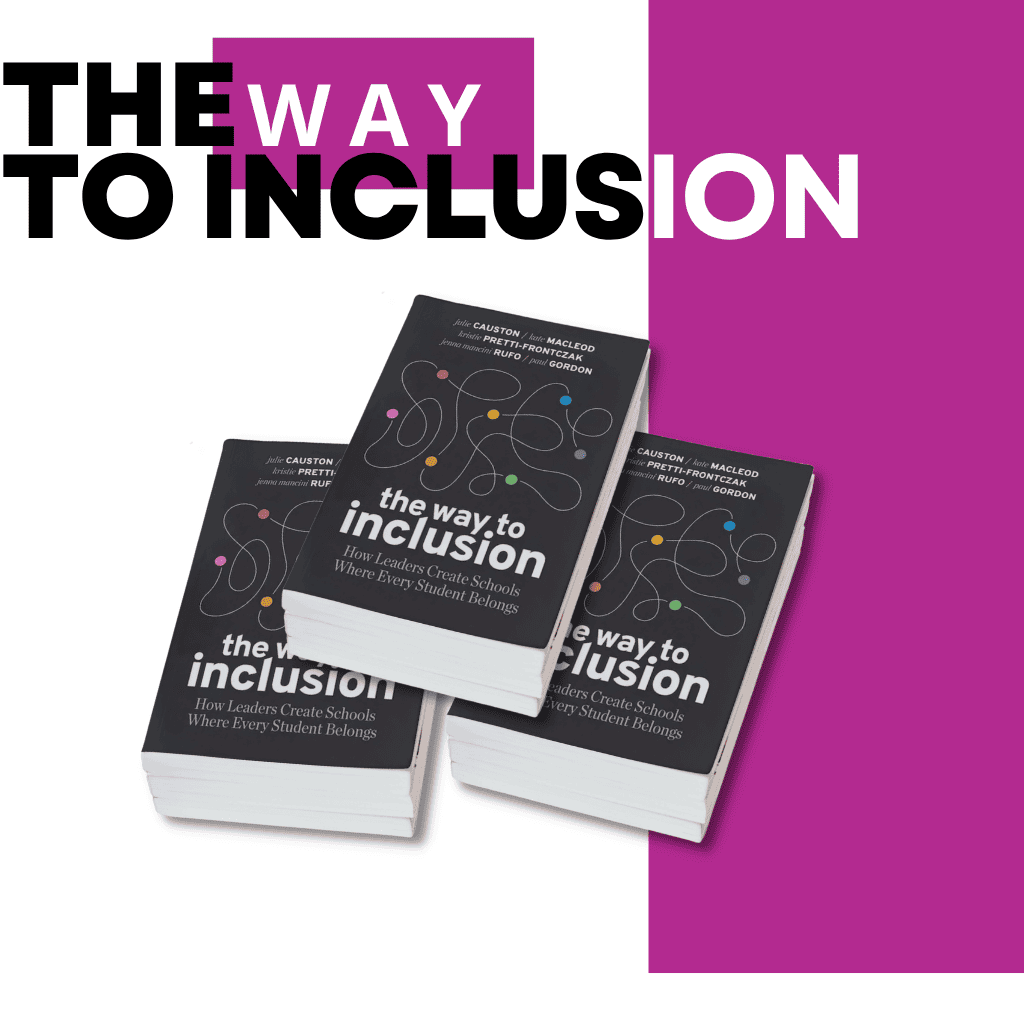
You Can’t Skip Steps in The Way to Inclusion
A 5-part virtual leadership book club that helps teams move past resistance, unclear definitions, and stalled inclusion efforts with a clear, practical roadmap.
JAN 13 • JAN 20 • JAN 27 • FEB 3 • FEB 10 (2027)
FREE Workshop:
Transform Your School with Inclusive Practices
How often do you hear questions like, “But HOW do we actually do it?” or “How do we move from theory to action and make inclusion a reality?”
We’ve got the answers! Join nationally recognized inclusion experts, Dr. Julie Causton and Dr. Kristie Pretti-Frontczak, for a FREE interactive workshop where we’ll tackle outdated special education practices, reveal three powerful classroom strategies, and share the real transformation of a school that fully embraced inclusion.
What Will I Learn?
-
- Overcome Resistance to Change: Tackle emotional and structural challenges to implementing inclusion successfully.
- Shift Mindsets and Inspire Action: Motivate your team to embrace new perspectives and practices.
- Clarify LRE and Service Models: Demystify Least Restrictive Environment and streamline service delivery for all students.
- Instant Resources: Leave with tools you can implement immediately to create more equitable and effective classrooms.
- Overcome Resistance to Change: Tackle emotional and structural challenges to implementing inclusion successfully.
Plus, get exclusive workshop pricing for Inclusion-Bytes—a professional development resource packed with 100s of practical and effective strategies for general and special education teachers about HOW to create inclusive classrooms!

Inclusive Education FAQs for Teachers and School Leaders
What is inclusive education?
Inclusive education is an approach where all students learn together in the same classroom, with the support and strategies they need to succeed. It focuses on access, participation, and belonging for every learner.
What are examples of inclusive classroom strategies?
Examples include co-teaching, differentiated instruction, behavior supports, and creating flexible learning environments that meet diverse student needs.
→ Read our co-teaching strategies blog
→ Explore behavior support strategies
Why is inclusive education important?
Inclusive education helps improve outcomes for all students by building stronger communities, increasing engagement, and supporting diverse learning needs in meaningful ways.