
from Dr. Kristie Pretti-Frontczak
& dr. Julie Causton
Inclusive Education Blog for Teachers
and School Leaders
This inclusive education blog is designed for teachers, school leaders, and support staff who are committed to building more inclusive classrooms. Inside this inclusive education blog, you’ll find practical strategies, behavior support tools, co-teaching insights, and leadership ideas you can use right away.
Latest Posts from Our Inclusive Education Blog:
Rethinking SMART Goals for IEPs: Ensuring Effective and Inclusive Education
As educators and educational leaders, we’ve all heard about SMART goals, right? These goals, designed to be Specific, Measurable, Achievable, Relevant, and Time-bound, have been a staple in education for years. They promise a structured approach to goal-setting,...

The Hidden Cost of Relying Too Much on Paras
When school administrators hear the phrase, "We just need one more paraprofessional," it's usually coming from a good place. Teachers want to give students the best support possible, and adding another para could be the solution. However, as Dr. Kristie...

5 Must-Try Strategies for a More Inclusive Classroom
Creating an inclusive classroom where every student feels supported, empowered, and valued is no small feat. Whether you're a seasoned educator or just starting out, you know that the challenges are real— but so are the rewards. There are five essential strategies...

IEPs Made Simple: Objectives, Benchmarks, and Everything in Between
When it comes to crafting Individualized Education Plans (IEPs), one common question that arises is the difference between an objective and a benchmark. It might sound simple, but there's a blend of art and science in understanding these terms. Since the...

Magic Phrases to Revolutionize Your Meetings
Meetings are an essential part of any educational environment, especially for inclusive educators and administrators. They provide a platform for collaboration, problem-solving, and decision-making. However, without the right communication strategies, meetings can...

Co-Teaching: The Key to Unlocking Student Potential
Imagine a classroom where every learner, regardless of age or ability, thrives and achieves their full potential. Sounds like a dream, right? Well, it doesn’t have to be. One of the most effective strategies to improve learner outcomes is co-teaching. Whether...
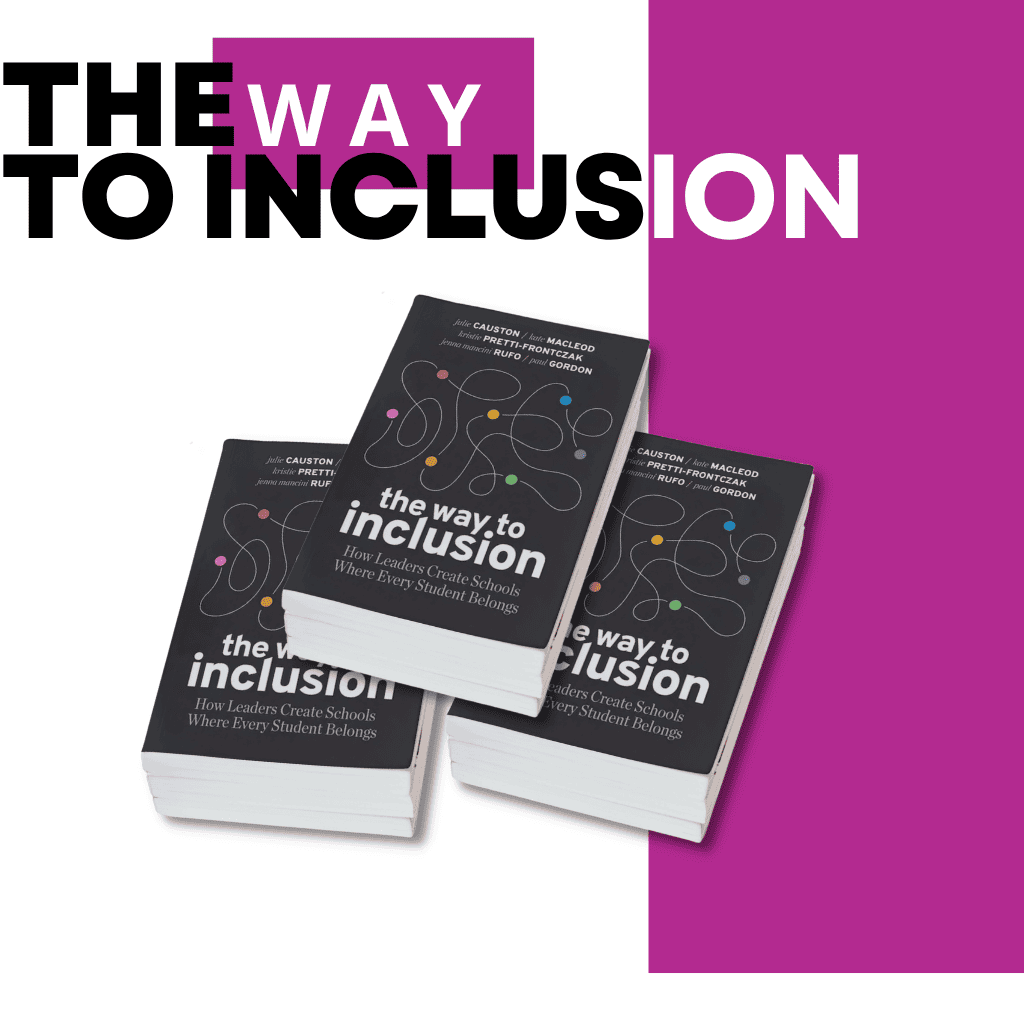
You Can’t Skip Steps in The Way to Inclusion
A 5-part virtual leadership book club that helps teams move past resistance, unclear definitions, and stalled inclusion efforts with a clear, practical roadmap.
JAN 13 • JAN 20 • JAN 27 • FEB 3 • FEB 10 (2027)
FREE Workshop:
Transform Your School with Inclusive Practices
How often do you hear questions like, “But HOW do we actually do it?” or “How do we move from theory to action and make inclusion a reality?”
We’ve got the answers! Join nationally recognized inclusion experts, Dr. Julie Causton and Dr. Kristie Pretti-Frontczak, for a FREE interactive workshop where we’ll tackle outdated special education practices, reveal three powerful classroom strategies, and share the real transformation of a school that fully embraced inclusion.
What Will I Learn?
-
- Overcome Resistance to Change: Tackle emotional and structural challenges to implementing inclusion successfully.
- Shift Mindsets and Inspire Action: Motivate your team to embrace new perspectives and practices.
- Clarify LRE and Service Models: Demystify Least Restrictive Environment and streamline service delivery for all students.
- Instant Resources: Leave with tools you can implement immediately to create more equitable and effective classrooms.
- Overcome Resistance to Change: Tackle emotional and structural challenges to implementing inclusion successfully.
Plus, get exclusive workshop pricing for Inclusion-Bytes—a professional development resource packed with 100s of practical and effective strategies for general and special education teachers about HOW to create inclusive classrooms!

Inclusive Education FAQs for Teachers and School Leaders
What is inclusive education?
Inclusive education is an approach where all students learn together in the same classroom, with the support and strategies they need to succeed. It focuses on access, participation, and belonging for every learner.
What are examples of inclusive classroom strategies?
Examples include co-teaching, differentiated instruction, behavior supports, and creating flexible learning environments that meet diverse student needs.
→ Read our co-teaching strategies blog
→ Explore behavior support strategies
Why is inclusive education important?
Inclusive education helps improve outcomes for all students by building stronger communities, increasing engagement, and supporting diverse learning needs in meaningful ways.