
When schools take bold steps toward inclusion, the first concern that surfaces—loudly and often—is safety.
Teachers ask, “What if a student gets hurt?”
Parents wonder, “Is this fair to my child?”
And many leaders privately think, “How do I protect everyone while moving forward with inclusion?”
Those fears are valid. They’re human. And they’re rooted in the reality that educators have seen dysregulation, aggression, and chaos in classrooms before. But here’s the truth: inclusive classrooms are often the safest classrooms—when they’re built on clarity, connection, and shared responsibility.
This week’s special episode of The Inclusion Podcast explores what it really takes to make inclusion and safety work hand in hand—and how school leaders can guide staff from fear to confidence.
3 Shifts That Change Everything
- Name the fear—but frame the vision.
Before offering policies or reassurances, start with empathy: “Yes, safety matters deeply.” Then frame inclusion as a shared responsibility, not a risk you’re asking educators to shoulder alone. When leaders acknowledge real fears and connect them to a larger purpose—belonging, dignity, and growth—those fears begin to lose power.
- Provide real tools, not platitudes.
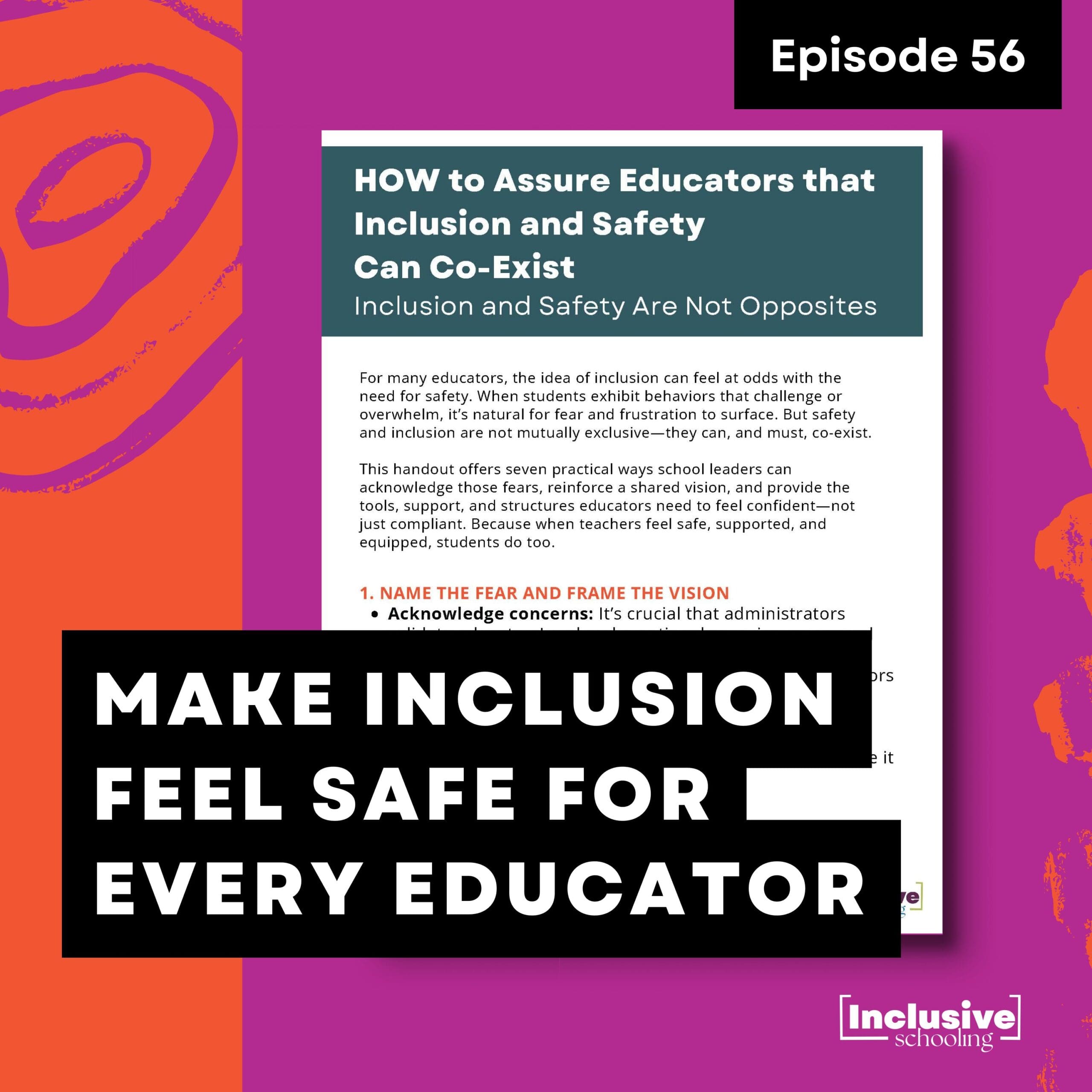
Educators don’t need another pep talk; they need practical support. The free companion handout, How to Assure Educators That Inclusion and Safety Can Coexist, includes easy-to-implement de-escalation strategies, rapid-response steps, and student support plan templates. These tools create consistency across classrooms so that when tension rises, staff know exactly what to do. Confidence replaces panic—and safety improves for everyone.
- Draw clear boundaries without exclusion.
Safety ≠ segregation. Removing students may seem like protection, but it often increases stress, stigma, and long-term risk. Instead, use temporary resets, portable supports, and collaborative safety plans that allow students to stay connected to their peers and learning community. When students remain included, they develop stronger relationships and self-regulation skills that prevent future crises.
Why This Matters for Leaders
If you’re leading inclusion, you’ve probably seen the tension between vision and fear. You’ve heard the sighs, the “what about safety?” objections, and the unspoken worry that inclusion means chaos.
This conversation is where your leadership matters most. You can:
- Reassure educators without dismissing their concerns.
- Build systems where proactive planning replaces reactive exclusion.
- Model “we’re in this together” mindsets that remind staff safety is collective, not individual.
- Celebrate success minutes—those brief moments of regulation and progress that shift the story from crisis to growth.
When educators feel supported and prepared, they feel safe. And when educators feel safe, students do too.
Why do educators fear inclusion — and how can school leaders respond?
Many educators worry that inclusive classrooms mean chaos, safety risks, or extra burden — concerns rooted in real fear and past experiences. The key is to acknowledge those fears first (e.g., “Yes, safety matters deeply”) and then frame inclusion as a shared responsibility grounded in belonging, dignity, and growth.
What practical tools help make inclusion and safety coexist?
Teachers need real, practical tools. According to the post, offering concrete supports such as de-escalation strategies, rapid-response steps, and team-based “student support plan” templates helps foster consistency across classrooms. This structured preparation helps replace panic with confidence while safeguarding all learners.
Does “safety” mean exclusion or removal of students?
Not necessarily. Exclusion — removing a student from the classroom as a default safety response — often increases stress, stigma, and the risk of future problems. Instead, we recommend using temporary resets, portable supports, and collaborative safety plans, allowing students to stay connected to their peers and learning community while receiving the support they need.
