The Behavior Reset Every School Leader Needs
Transcript [pdf]
SHOW NOTES
Key Takeaways
-
- Old behavior practices don’t work: Behavior charts, token economies, suspensions, and public shaming are outdated and ineffective.
- What does work is relationship-based: Strategies rooted in connection, safety, co-regulation, and environmental adjustments create lasting change.
- Mindset shifts matter: Moving from “students are making bad choices” to “students are signaling unmet needs” is a crucial reframe for school leaders.
- Consistency across the system is essential: One-off PD sessions without shared language or follow-up create confusion and resistance.
- Leaders need tools, not more initiatives: What’s missing is a clear, ready-to-use approach that can be shared with staff right away.
- Old behavior practices don’t work: Behavior charts, token economies, suspensions, and public shaming are outdated and ineffective.
Episode Download/Handout
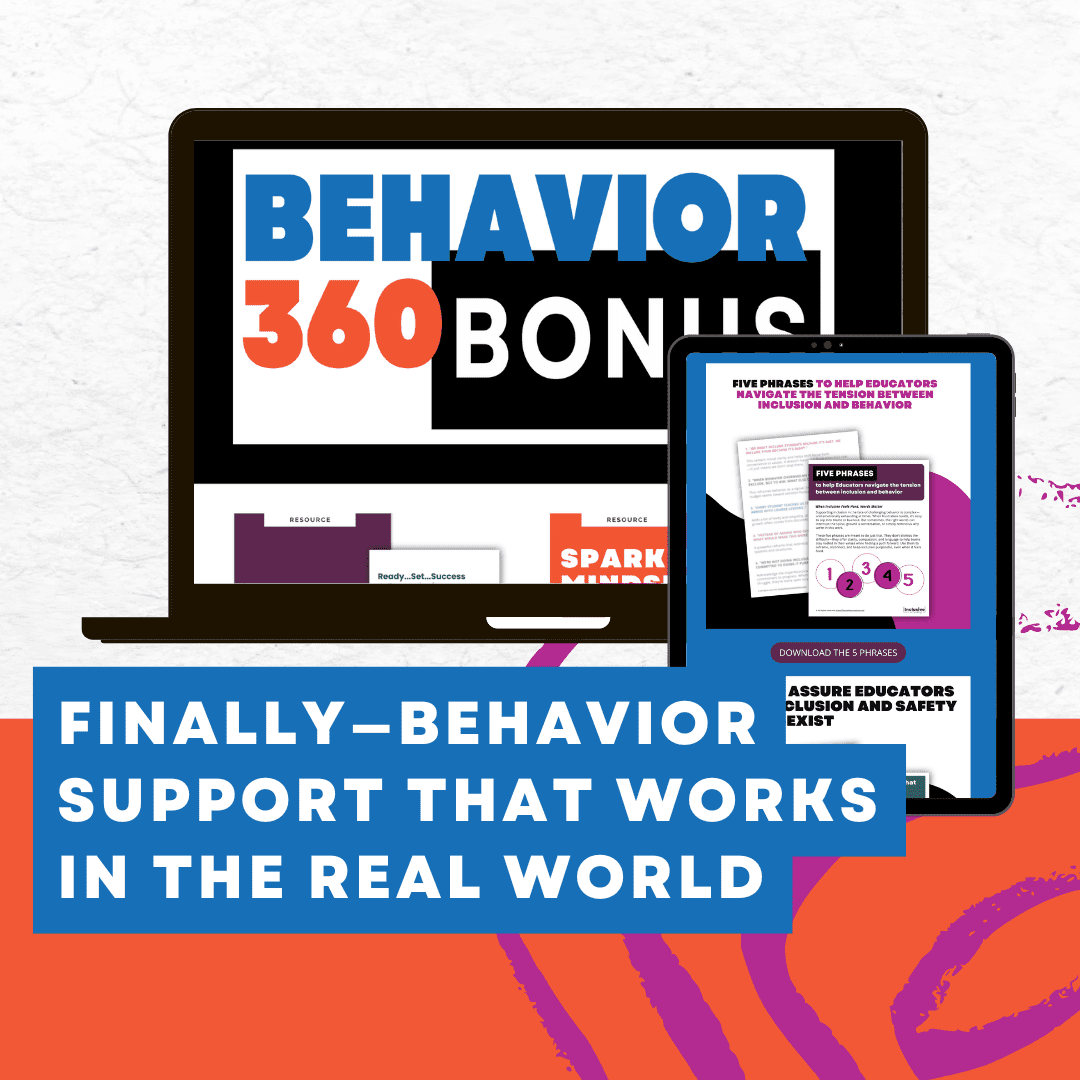
We’ve created a Behavior360 Bonus Dashboard — a free collection of ready-to-use resources, including:
-
- A T-chart outlining what works vs. what doesn’t
- 10 powerful mindset shifts to reset your approach to behavior
- Research and strategies you can start using immediately with your team
- A T-chart outlining what works vs. what doesn’t
👉 Access the free dashboard here (enter your name and email the first time) – inclusiveschooling.com/360-podcast
Highlights from the Dashboard
-
- Julie’s Favorite: The ready-made T-chart that helps leaders quickly identify harmful practices to phase out and supportive practices to lean into.
- Kristie’s Favorite: The 10 Mindset Shifts handout that reframes defiance, misbehavior, and “bad choices” as stress responses — helping staff see behavior through a brain-based, compassionate lens.
- Julie’s Favorite: The ready-made T-chart that helps leaders quickly identify harmful practices to phase out and supportive practices to lean into.
Practical Tips
-
- [06:35] Instead of relying on behavior charts, token economies, or timeouts, start by strengthening connection and consistency in daily routines.
- [11:15] Use private over public feedback to maintain dignity and reduce shame — this simple shift can immediately change student engagement.
- [13:50] Encourage staff to ask: “What’s happening in the environment?” rather than “What’s wrong with this student?” to uncover root causes and develop more effective supports.
- [06:35] Instead of relying on behavior charts, token economies, or timeouts, start by strengthening connection and consistency in daily routines.