Why Most Consequences Don't Work
Transcript [pdf]
SHOW NOTES
Consequences are one of those things almost everyone agrees students need. But what are we actually trying to accomplish when we give them?
In this episode, Julie and Kristie challenge the long-standing belief that students need to suffer, lose something, or feel uncomfortable in order to learn from their behavior. They explore the difference between punishment and natural or logical consequences, and why regulation, connection, and skill-building matter far more than making students “pay” for their mistakes.
Through familiar classroom dilemmas, including hurting others, refusing work, and using hurtful language, they invite educators to shift from asking, “What consequence does this behavior deserve?” to “What do we want this student to learn?”
Because every consequence teaches something. The question is whether we’re teaching responsibility, communication, and repair, or embarrassment, resentment, and fear.
Key Takeaways
-
- Consequences and punishment aren’t the same thing. A consequence is simply what follows a behavior. Punishment intentionally adds discomfort in hopes of changing behavior.
- Students can’t learn new skills when they’re dysregulated. Co-regulation and connection create the conditions for learning, responsibility, and repair.
- The goal is learning, not suffering. Effective consequences help students practice the communication, empathy, problem-solving, and self-regulation skills we want them to develop.
- Refusal is communication. Rather than demanding compliance, get curious about what’s making participation difficult.
- Accountability doesn’t require punishment. We can maintain boundaries, address harm, repair relationships, and hold high expectations without shame or exclusion.
- What happens next matters. Sending a student to the office may end the immediate disruption, but it doesn’t necessarily teach a safer or more effective way to respond next time.
Episode Download / Handout
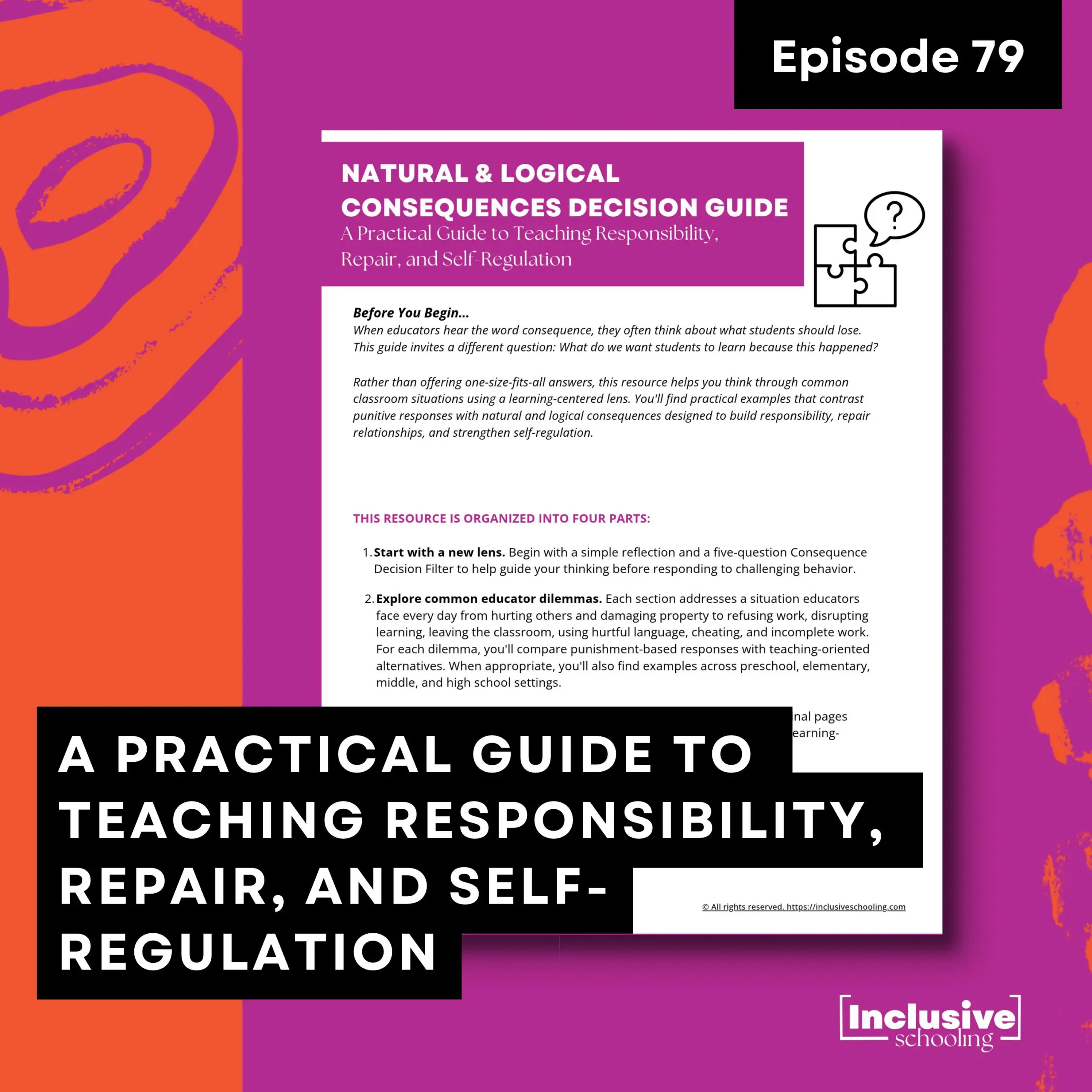
Natural & Logical Consequences Decision Guide: A Practical Guide to Teaching Responsibility, Repair, and Self-Regulation
When a student hurts someone, refuses to participate, damages materials, or disrupts learning, what should happen next?
This six-page guide helps educators move beyond automatic punishments and choose responses that actually teach.
Inside, you’ll find:
-
- A five-question Consequence Decision Filter to guide your decisions.
- Eight common educator dilemmas with side-by-side examples of punishment versus natural or logical consequences.
- Practical alternatives for situations involving aggression, refusal, hurtful language, incomplete work, and more.
- Clarification about what natural and logical consequences are, and what they are not.
- Reflection questions to help teams examine whether their current practices support learning or perpetuate punishment.
Why download it?
Because knowing what not to do isn’t enough. Educators need practical alternatives that maintain safety, preserve dignity, and help students develop the skills they’re still learning.
👉 Get the handout at: inclusiveschooling.com/download79
Practical Moves for Your Classroom or School
-
- Before deciding on a consequence, identify the skill you want the student to learn.
- When someone is hurt, attend to everyone’s physical and neurological safety before moving to problem-solving or repair.
- Replace “How do I make them comply?” with “What is making participation difficult?”
- Build opportunities for students to practice new skills instead of relying on removal, lost privileges, or public correction.
- Examine your school’s most common consequences. Are they connected to the behavior? Do they teach something useful?
- During team conversations, ask whether the response will help the student become more capable tomorrow than they are today.
Additional Resources
The Inclusion Podcast, Episode 50: Praise and Rewards: Julie and Kristie take a closer look at the traditional behavior systems educators have relied on for decades, including sticker charts, clip systems, praise, rewards, and punishment. They examine why these approaches often prioritize compliance over learning and share practical alternatives grounded in connection, co-regulation, and intrinsic motivation. A natural companion to Episode 79 for teams ready to rethink their behavior management practices.
The Inclusion Podcast, Episode 71: Less Praise, More Learning: 7 Reasons to Shift Toward Intrinsic Motivation: Even when our intentions are positive, constant praise can unintentionally teach students to seek adult approval rather than develop their own sense of competence. Julie and Kristie explore how to shift from evaluative praise to meaningful acknowledgment, reflection, and feedback that builds independence and internal motivation. Especially useful for educators looking to move beyond both rewards and punishment.
The Inclusion Podcast, Episode 61: F%$# You! Now What?: When a student swears, lashes out, or uses hurtful language, it’s easy for adults to feel that an immediate punishment is necessary. This episode explores what to do instead, including managing our own reactions, maintaining boundaries, and responding without escalating the situation. A practical companion to Episode 79’s discussion of responding to harm through regulation, teaching, and repair.