
from Dr. Kristie Pretti-Frontczak
& dr. Julie Causton
Inclusive Education Blog for Teachers
and School Leaders
This inclusive education blog is designed for teachers, school leaders, and support staff who are committed to building more inclusive classrooms. Inside this inclusive education blog, you’ll find practical strategies, behavior support tools, co-teaching insights, and leadership ideas you can use right away.
Latest Posts from Our Inclusive Education Blog:
Why Consequences Aren’t Changing Student Behavior
School leaders are often asked to respond when a student's behavior has escalated, someone has been hurt, or a teacher feels they've exhausted every option. The conversation usually turns to consequences. What should the student lose? How long should they be removed?...

Stop Planning PD Around What You Need to Cover
School leaders spend a lot of time deciding what to put into professional development. The better question may be what educators will actually do differently because of it. Effective professional development for teachers should create time to interact with new ideas,...
Are You Tracking the Wrong Behavior Data?
When a student is struggling with challenging behavior, schools get very good at documenting the struggle. We track office referrals, incidents, duration, frequency, triggers, removals, and what happened afterward. That information can matter. But if most of our data...

Is Distractibility a Reason for Pull-Out?
It happens quickly in IEP and problem-solving meetings. A student is described as “too distractible” in the general education classroom, and before long, the team is discussing resource room time, small group instruction, or another place where the student might be...
Are “Life Skills” Classrooms Really Preparing Students for the Real World?
Schools often defend restrictive practices with a familiar phrase: “We’re preparing students for the real world.” But school leaders need to look carefully at what we're calling real-world preparation, especially for students with disabilities. Adult life includes...
Behavior Charts in Disguise: What School Leaders Should Look For
Many schools will tell you they no longer use behavior charts. The red, yellow, and green cards are gone. The clips have disappeared. Public behavior boards have (hopefully) come down. But the practice itself may still be there. Points, paws, tokens, classroom apps,...
Does This Student Need a Small Group? Ask This First.
One of the most common things school leaders hear is: "This student needs a small group." The statement usually comes from a place of care. A student is struggling, a team wants to help, and small group instruction feels like the obvious solution. The problem is that...
The Most Important Support Question Isn’t About the Student
School teams spend a lot of time asking: "What support does this student need?" It's an important question. But it may not be the most important one. A more powerful question is: "Would I want this support if I were the student?" That single question can expose...
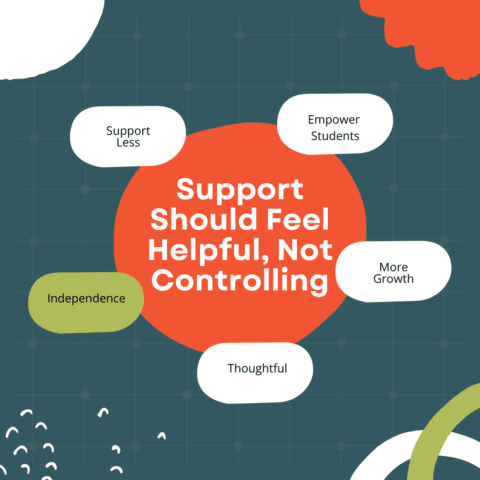
Support Should Feel Helpful, Not Controlling
Most school leaders can spot a student who isn't receiving enough support. It's much harder to recognize when a student is receiving too much. But over-supporting students is one of the most common barriers to inclusion. The Hidden Cost of Over-Support When adults...
Would You Want This Kind of Support All Day?
Imagine your district assigned someone to follow you throughout your workday. They decide when to help. They stand next to you during meetings. They remind you what to do before you can respond. Sometimes they answer questions for you. Most adults would find that...
Why “Good Job” Might Be Hurting Student Outcomes
Student praise is one of the most common tools educators use to encourage learning. But when praise becomes automatic or overly generic, it can unintentionally create dependence on adult approval rather than helping students build confidence and independence. Walk...

What Should IEP Goals Focus On Instead of Compliance?
IEP goals are meant to support access to learning, not measure whether a student will comply with tasks they don’t want to do. But many goals still center on staying on task, following directions, or completing non-preferred work. These may seem reasonable, but they...
Inclusive Education FAQs for Teachers and School Leaders
What is inclusive education?
Inclusive education is an approach where all students learn together in the same classroom, with the support and strategies they need to succeed. It focuses on access, participation, and belonging for every learner.
What are examples of inclusive classroom strategies?
Examples include co-teaching, differentiated instruction, behavior supports, and creating flexible learning environments that meet diverse student needs.
→ Read our co-teaching strategies blog
→ Explore behavior support strategies
Why is inclusive education important?
Inclusive education helps improve outcomes for all students by building stronger communities, increasing engagement, and supporting diverse learning needs in meaningful ways.