
from Dr. Kristie Pretti-Frontczak
& dr. Julie Causton
Inclusive Education Blog for Teachers
and School Leaders
This inclusive education blog is designed for teachers, school leaders, and support staff who are committed to building more inclusive classrooms. Inside this inclusive education blog, you’ll find practical strategies, behavior support tools, co-teaching insights, and leadership ideas you can use right away.
Latest Posts from Our Inclusive Education Blog:
Inclusion and Safety in Schools: How Leaders Can Build Trust, Calm, and Confidence Among Educators
When schools take bold steps toward inclusion, the first concern that surfaces—loudly and often—is safety. Teachers ask, “What if a student gets hurt?”Parents wonder, “Is this fair to my child?”And many leaders privately think, “How do I protect everyone while...
Stop the Behavior Battles: The Reset Every School Leader Has Been Waiting For
Behavior challenges are draining staff energy, stalling lessons, and making inclusion feel impossible. You’ve rolled out PBIS, SEL, and MTSS. You’ve invested in PD. And yet, behavior is still the number one issue that keeps showing up at your desk. It’s not because...

Shifting School Culture: 5 Small Moves That Create Big Change
If mindset is our direction, heartset is our purpose, and skillset is our practice—then culture is the climate that determines whether we move freely, get stuck, or flourish together. For many school leaders, culture feels like the hardest thing to change. You see...

10 Quick Inclusion Strategies to Reset Your Classroom (and Your Staff)
Somewhere between October and spring break, the school year starts to feel heavy. Energy dips, routines get stale, and inclusive practices sometimes slip into the background. For leaders, that’s especially frustrating—because you know your LRE data is too low,...
One Teach, One Make Multisensory: The Co-Teaching Strategy That Maximizes Inclusive Learning
If you’ve ever been in a co-taught classroom, you know the familiar trap: one teacher leads the lesson while the other… watches. They might circulate, stand to the side, or offer quiet support—but they’re not fully engaged. And that’s a missed opportunity for every...

You’re the Thermostat: Practical Co-Regulation Strategies for Inclusive Classrooms
When classrooms feel too hot—students yelling, disengaged, overwhelmed—or too cold—shut down, disconnected, refusing—it’s not always about behavior management. It’s about the emotional temperature. And your job as an educator, paraprofessional, or administrator?...

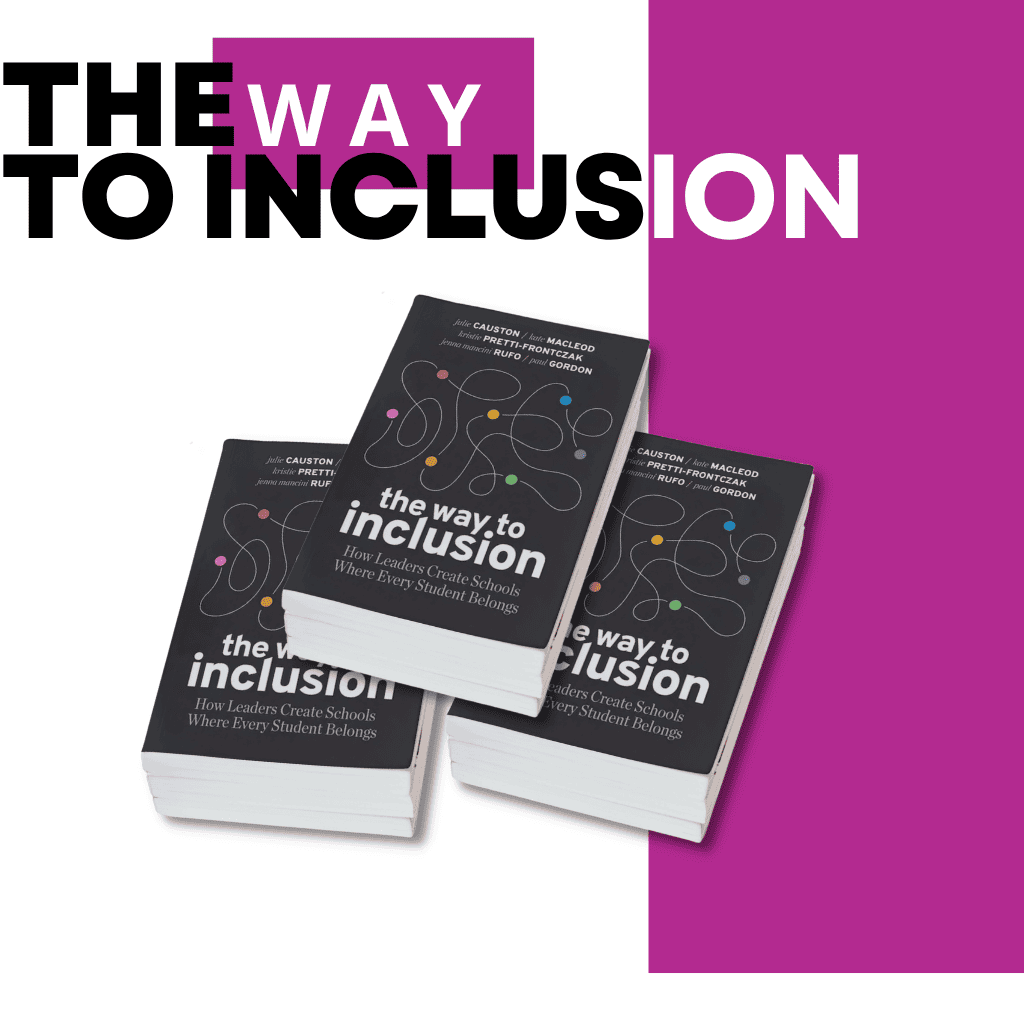
You Can’t Skip Steps in The Way to Inclusion
A 5-part virtual leadership book club that helps teams move past resistance, unclear definitions, and stalled inclusion efforts with a clear, practical roadmap.
JAN 13 • JAN 20 • JAN 27 • FEB 3 • FEB 10 (2027)
FREE Workshop:
Transform Your School with Inclusive Practices
How often do you hear questions like, “But HOW do we actually do it?” or “How do we move from theory to action and make inclusion a reality?”
We’ve got the answers! Join nationally recognized inclusion experts, Dr. Julie Causton and Dr. Kristie Pretti-Frontczak, for a FREE interactive workshop where we’ll tackle outdated special education practices, reveal three powerful classroom strategies, and share the real transformation of a school that fully embraced inclusion.
What Will I Learn?
-
- Overcome Resistance to Change: Tackle emotional and structural challenges to implementing inclusion successfully.
- Shift Mindsets and Inspire Action: Motivate your team to embrace new perspectives and practices.
- Clarify LRE and Service Models: Demystify Least Restrictive Environment and streamline service delivery for all students.
- Instant Resources: Leave with tools you can implement immediately to create more equitable and effective classrooms.
- Overcome Resistance to Change: Tackle emotional and structural challenges to implementing inclusion successfully.
Plus, get exclusive workshop pricing for Inclusion-Bytes—a professional development resource packed with 100s of practical and effective strategies for general and special education teachers about HOW to create inclusive classrooms!

Inclusive Education FAQs for Teachers and School Leaders
What is inclusive education?
Inclusive education is an approach where all students learn together in the same classroom, with the support and strategies they need to succeed. It focuses on access, participation, and belonging for every learner.
What are examples of inclusive classroom strategies?
Examples include co-teaching, differentiated instruction, behavior supports, and creating flexible learning environments that meet diverse student needs.
→ Read our co-teaching strategies blog
→ Explore behavior support strategies
Why is inclusive education important?
Inclusive education helps improve outcomes for all students by building stronger communities, increasing engagement, and supporting diverse learning needs in meaningful ways.