


In this episode, Julie and Kristie invite listeners to put on their creativity hats and explore five small yet powerful shifts that can profoundly improve school culture. They focus on the “feel” of a school—how it welcomes students, families, and educators—and how small tweaks, like changing a sign from “You are late” to “We’re glad you’re here,” can radically shift emotional tone and engagement. From morning greetings to creative cafeteria strategies, this episode empowers listeners to build inclusive culture through intentional micro-moves.
Tension between Inclusion
and Safety
This courageous and nuanced conversation dives into one of the biggest fears around inclusion: safety. Julie and Kristie name the fear, challenge ableist assumptions, and provide seven steps to help educators feel equipped, empowered, and proactive when facing concerns about safety in inclusive settings. With humor and honesty, they tackle myths, share research-backed practices, and guide listeners through a shift from exclusion-based thinking to supportive, inclusive responses.

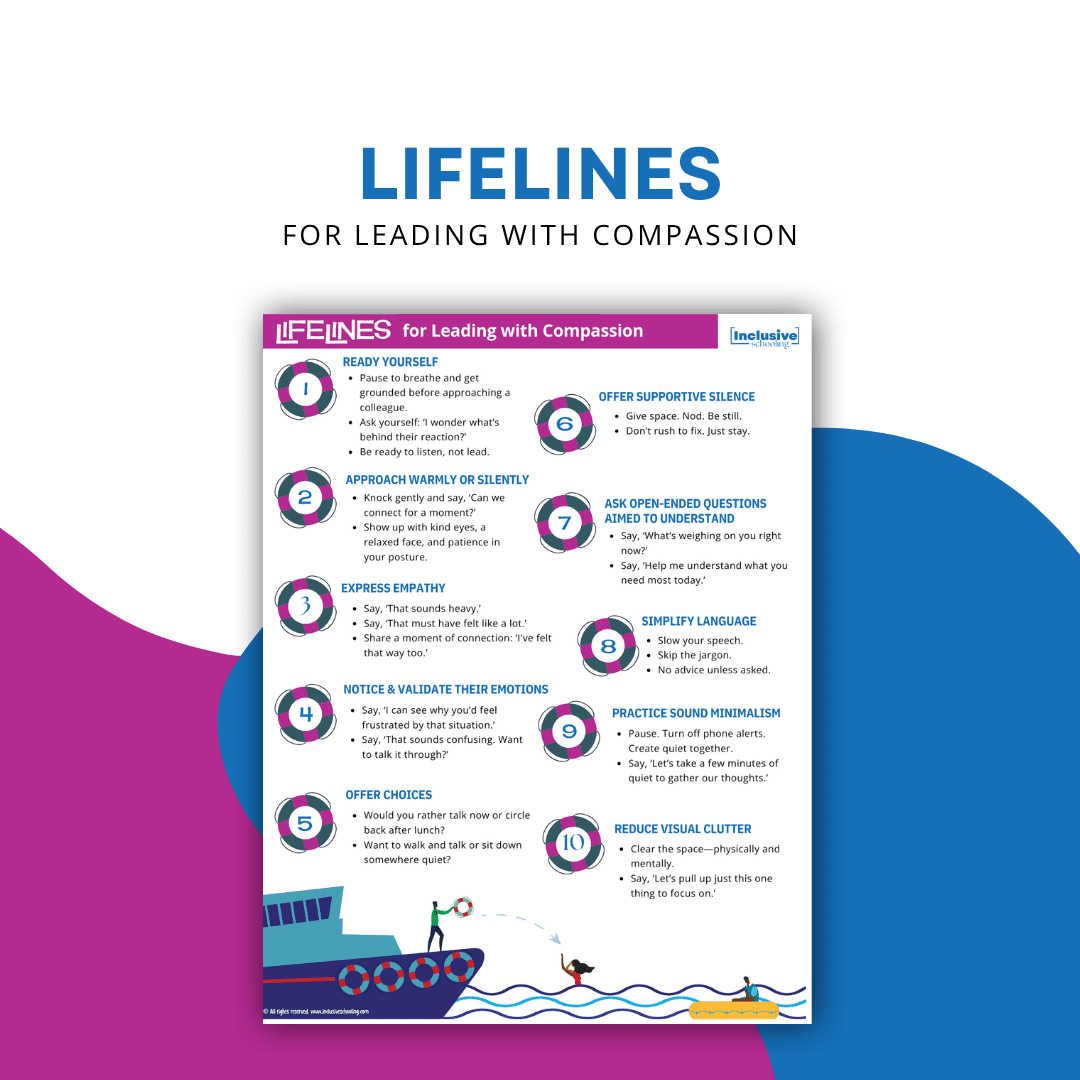
Lifelines for Leading with Compassion
Why Consequences Aren’t Changing Student Behavior
School leaders are often asked to respond when a student’s behavior has escalated, someone has been hurt, or a teacher feels they’ve exhausted every option. The conversation usually turns to consequences. What should the student lose? How long should...
We Planned Your Next PLC (You’re Welcome.)
What if professional learning didn’t have to mean another long meeting or another slide deck? In this episode, Julie and Kristie share how schools are transforming 15-minute podcast episodes into meaningful professional learning that sparks reflection, conversation, and real changes in practice. You’ll discover a simple framework for using podcasts in PLCs, staff meetings, and leadership teams to create learning that educators actually look forward to.
Stop Planning PD Around What You Need to Cover
School leaders spend a lot of time deciding what to put into professional development. The better question may be what educators will actually do differently because of it. Effective professional development for teachers should create time to interact with new...
Success Minutes: The Mind-Blowing Metric That Changes Everything
What if the key to changing behavior isn’t tracking what’s going wrong, but noticing what’s going right? In this episode, Kristie and Julie introduce the “success minutes” framework, a simple but powerful shift that helps teams focus on moments of engagement, regulation, and connection. You’ll learn how to spot small wins, uncover patterns, and use them to create more success throughout the day.
Are You Tracking the Wrong Behavior Data?
When a student is struggling with challenging behavior, schools get very good at documenting the struggle. We track office referrals, incidents, duration, frequency, triggers, removals, and what happened afterward. That information can matter. But if most of our...
“They’re Too Distractible”… Is NOT a Reason for Pull-Out
“They’re too distractible” is often used as a quick justification for pull-out, but what if it’s pointing to something else entirely? In this episode, Kristie and Julie unpack why distractibility is not a placement decision and how it often signals a need for better supports, not removal. You’ll learn what to say in the moment and how to redesign instruction, environment, and engagement so students can succeed right where they are
Is Distractibility a Reason for Pull-Out?
It happens quickly in IEP and problem-solving meetings. A student is described as “too distractible” in the general education classroom, and before long, the team is discussing resource room time, small group instruction, or another place where the student might be...
The “Real World Lie” Stop Preparing Students for a Life No One Would Choose
We’re preparing students for the real world”, but what if that version of the real world is outdated, inequitable, and not a life anyone would choose? In this episode, Julie and Kristie challenge common school practices that prioritize compliance over autonomy, especially for students with disabilities, and expose how systems like “life skills” classrooms often lower expectations instead of expanding opportunity. You’ll be invited to rethink what real preparation looks like, and how to design schools that reflect the flexible, human-centered world we actually live in.
Are “Life Skills” Classrooms Really Preparing Students for the Real World?
Schools often defend restrictive practices with a familiar phrase: “We’re preparing students for the real world.” But school leaders need to look carefully at what we’re calling real-world preparation, especially for students with disabilities. Adult life...
Behavior Charts in Disguise—and Why They Need to Go
When a student is struggling, “they need a small group” can sound like the right solution, but too often, it’s code for removal and exclusion. In this episode, Julie and Kristie unpack the common trap of equating support with separation and show how small group instruction can, and should, happen within general education. You’ll learn how to shift from pull-out thinking to inclusive design using flexible grouping, choice, and intentional planning.
Legal Education
Better Behavior Starts With Better Solutions
Behavior 360 is an effective professional learning series built upon a new way of thinking about behavior.
Behavior 360 equips educators with practical, brain-based strategies for preventing challenging behavior, responding effectively in the moment, and supporting lasting change.
Instead of relying on rewards, punishments, or removal, your team will create calmer classrooms, stronger relationships, and better outcomes for students.
- 10+ hours of practical, on-demand professional learning.
- 34 scenario-based lessons for everything from refusal and aggression to running, swearing, and classroom disruption.
- Proactive classroom strategies, de-escalation techniques, and Student Success Plans.
- Downloadable guides, transcripts, and bonus resources.
“…Inclusive Schooling always delivers real, inclusive tools that work.”
— Director of Special Services, Warren County Public Schools (VA)
Show Me Behavior 360

Perfect for:
All PreK–12 Educators, Specialists, and School Leaders
Follow for daily tips and inspiration!