
WELCOME TO
THE INCLUSION PODCAST
YOUR GO-TO SOURCE for making INCLUSIVE EDUCATION a REALITY.
In each 15-minute episode, we dive into the heart of inclusive education, offering expert insights, real-world strategies, and answers to burning questions on how to make every classroom welcoming for all students, PreK-12. From redefining what special education is (and isn’t) to understanding Least Restrictive Environment (LRE) and exploring cutting-edge co-teaching practices, we cover the essential topics that help schools transform.
binge
ALL EPISODES
We Planned Your Next PLC (You’re Welcome.)
What if professional learning didn’t have to mean another long meeting or another slide deck? In this episode, Julie and Kristie share how schools are transforming 15-minute podcast episodes into meaningful professional learning that sparks reflection, conversation, and real changes in practice. You’ll discover a simple framework for using podcasts in PLCs, staff meetings, and leadership teams to create learning that educators actually look forward to.
Success Minutes: The Mind-Blowing Metric That Changes Everything
What if the key to changing behavior isn’t tracking what’s going wrong, but noticing what’s going right? In this episode, Kristie and Julie introduce the “success minutes” framework, a simple but powerful shift that helps teams focus on moments of engagement, regulation, and connection. You’ll learn how to spot small wins, uncover patterns, and use them to create more success throughout the day.
“They’re Too Distractible”… Is NOT a Reason for Pull-Out
“They’re too distractible” is often used as a quick justification for pull-out, but what if it’s pointing to something else entirely? In this episode, Kristie and Julie unpack why distractibility is not a placement decision and how it often signals a need for better supports, not removal. You’ll learn what to say in the moment and how to redesign instruction, environment, and engagement so students can succeed right where they are
The “Real World Lie” Stop Preparing Students for a Life No One Would Choose
We’re preparing students for the real world”, but what if that version of the real world is outdated, inequitable, and not a life anyone would choose? In this episode, Julie and Kristie challenge common school practices that prioritize compliance over autonomy, especially for students with disabilities, and expose how systems like “life skills” classrooms often lower expectations instead of expanding opportunity. You’ll be invited to rethink what real preparation looks like, and how to design schools that reflect the flexible, human-centered world we actually live in.

Behavior Charts in Disguise—and Why They Need to Go
When a student is struggling, “they need a small group” can sound like the right solution, but too often, it’s code for removal and exclusion. In this episode, Julie and Kristie unpack the common trap of equating support with separation and show how small group instruction can, and should, happen within general education. You’ll learn how to shift from pull-out thinking to inclusive design using flexible grouping, choice, and intentional planning.
When “They Need a Small Group” Is Code for Exclusion
When a student is struggling, “they need a small group” can sound like the right solution, but too often, it’s code for removal and exclusion. In this episode, Julie and Kristie unpack the common trap of equating support with separation and show how small group instruction can, and should, happen within general education. You’ll learn how to shift from pull-out thinking to inclusive design using flexible grouping, choice, and intentional planning.
The Golden Rule
Imagine someone supporting you all day—deciding when to step in, what to say, and how close to stand. In this episode, Kristie and Julie explore how even well-intentioned help can become intrusive, overwhelming, or counterproductive for students. You’ll learn how to evaluate support through the lens of dignity, autonomy, and the true purpose of inclusion.

Less Praise, More Learning: 7 Reasons to Shift Toward Intrinsic Motivation
Praise might feel positive—but it can actually backfire. In this episode, Julie and Kristie dig into why overpraising can reduce motivation, damage trust, and even increase student anxiety. You’ll walk away with seven key shifts educators can make to support authentic, internal motivation in every learner.
When “Doing Nothing” Is Actually Doing Something: Reframing Engagement
What if we’ve misunderstood what engagement really looks like? In this powerful episode, Kristie and Julie unpack why rest, quiet moments, and nonverbal participation are all valid—and vital—ways students engage with learning. You’ll hear how reframing “doing nothing” can create more equitable classrooms for neurodivergent and disabled learners.

Completing Unpreferred Tasks Should NOT Be an IEP Goal
Is “doing hard things” really the right benchmark for students with disabilities? In this episode, Julie and Kristie challenge the idea that completing unpreferred tasks is an appropriate, or meaningful, IEP goal. They explore what makes a goal truly inclusive and share a simple way to shift from compliance-based goals to ones that support access, autonomy, and real learning.
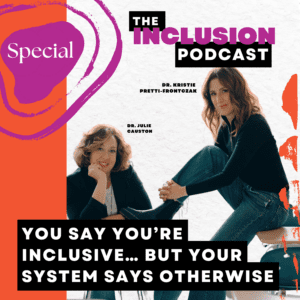
Special Episode You Say You’re Inclusive… But Your System Says Otherwise
You say you’re inclusive—but what does your system actually show? In this special episode, Julie and Kristie unpack seven clear indicators that reveal whether a school is truly inclusive or just aspiring to be, from unclear definitions to practices that unintentionally exclude students. You’ll walk away with practical ways to spot misalignment and take immediate steps toward meaningful, system-wide change.
The Inclusive Schedule Trap: What Schools Keep Getting Wrong—and What to Do Instead
Too often, what looks like an inclusive schedule on paper falls apart in practice. In this episode, Kristie and Julie explain the common traps teams fall into when creating student schedules—and how to build ones that truly support belonging and participation. You’ll learn how to spot “support-based scheduling” and replace it with a plan that centers access, collaboration, and student needs.
Steal This Script: How Leaders Talk About Inclusive Education
In this episode, Julie and Kristie reveal the exact words school leaders can use to promote inclusion with clarity, confidence, and compassion. From responding to resistance to inspiring buy-in, you’ll get ready-to-use scripts and strategies for navigating tough conversations about inclusive practices. Whether you’re a principal, coach, or advocate, you’ll leave feeling prepared to lead with language that unites.

The Relationship Behind the Roles: Co-Teaching That Clicks
Before you can have trust, share a classroom, or divide lessons, you have to build a relationship. In this episode, Kristie and Julie explore what makes co-teaching work—from shared routines to honest conversations—and why relational trust is the foundation of everything. You’ll get practical ways to deepen connection with your co-teacher, whether you’re starting fresh or have worked together for years.
Read the Room, Regulate Yourself: What to Do When Behavior Escalate
When a student yells, swears, withdraws, or melts down, it’s not about control—it’s about regulation. In this episode, Julie and Kristie share how to shift from managing behavior to calming nervous systems in the moment. Learn 20 real-time strategies that help de-escalate intense situations with compassion, not compliance.
A Para Is Not an Environment: Clearing Up the LRE Confusion
There’s a lot of confusion around what Least Restrictive Environment (LRE) really means—especially when paraprofessional support is part of the plan. In this episode, Julie and Kristie clarify how LRE works under IDEA, why needing support doesn’t mean a student should be removed, and how we can shift from gatekeeping to problem-solving. You’ll walk away with language, mindset shifts, and team questions that build a stronger culture of inclusion.
We’re Doing Breaks Wrong—and It’s Backfiring
When students are dysregulated, offering a break can feel like the right move—but is it always helpful? In this episode, Kristie and Julie unpack how well-meaning adult-led breaks can unintentionally reinforce escape patterns or erode access to learning. You’ll learn how to offer breaks with purpose, equity, and intention—so students stay connected, not sent away. Classroom behavior breaks are often used to manage student behavior, but when used incorrectly, they can unintentionally reduce access, learning, and belonging.
Design Before Discipline: How to Prevent Behavior with Simple Shifts
Before behavior escalates, the classroom environment can do the heavy lifting. In this episode, Julie and Kristie share 16 proactive tweaks that help prevent challenging behavior by reducing stress and increasing connection. From visual supports to relationship rituals, these simple shifts make classrooms calmer and more inclusive for everyone.
F%$# you! Now what?
When a student swears at you or lashes out, it’s easy to react. In this powerful episode, Julie and Kristie help you build a personalized response plan that prioritizes connection, not punishment—even in moments of shock or hurt. Discover mantras, phrases, and actions to keep dignity and trust at the center.

Non-Verbal Ways to Support Behavior in the Moment
What your body says in the classroom matters just as much as your words—sometimes more. In this episode, Julie and Kristie break down how your posture, pace, tone, and eye contact can either regulate or escalate behavior. Learn to scan your body and send signals of safety and calm.

Mini-Moments that Matter: Building Trust Without Tons of Time
Building trust with students doesn’t require big gestures—it’s about intentional mini moments woven into everyday interactions. Julie and Kristie share 23 simple ways to connect with students while teaching, even in packed classrooms. Learn how quick check-ins can boost regulation, trust, and inclusion.

Why Running and Refusing Aren’t the Real Problem
What if a student runs? Or refuses to participate? In this episode, Julie and Kristie go beyond labels to focus on nervous system states, explaining why behaviors like eloping or shutting down are signs of dysregulation—not defiance.
Stop Looking for a Trigger: What Behavior is Really Communicating
Sometimes behavior isn’t about a trigger—it’s about what’s happening beneath the surface. In this episode, Julie and Kristie unpack why searching for a single cause of behavior often leads us in the wrong direction, and how we can shift to listening beneath behavior instead. Learn how to identify the real messages behind actions like yelling out or withdrawing, and respond with empathy and clarity.
Inclusion and Safety Can Coexist
This courageous and nuanced conversation dives into one of the biggest fears around inclusion: safety. Julie and Kristie name the fear, challenge ableist assumptions, and provide seven steps to help educators feel equipped, empowered, and proactive when facing concerns about safety in inclusive settings. With humor and honesty, they tackle myths, share research-backed practices, and guide listeners through a shift from exclusion-based thinking to supportive, inclusive responses.
Listen on Your Favorite Platform
spotify

audible

apple

amazon

youtube

podbean

Find What You Need:
PD • Para Support • Workshops • About Us • Contact Us
® 2024 Inclusive Schooling • All rights Reserved • Privacy